The European Union has signed two construction contracts worth almost €435,000 to widen and modernise the Agios Dometios/Metehan crossing—the busiest checkpoint linking the Republic-controlled south with the Turkish-Cypriot north. UN Development Programme crews began night-time excavations on 4 December and will keep heavy equipment parked inside the UN buffer zone to avoid daytime gridlock.
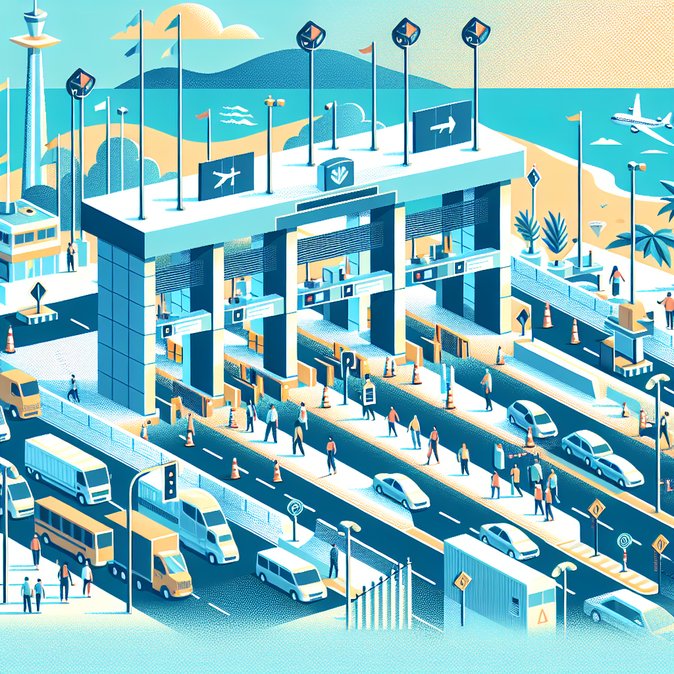
Engineers will repave the vehicle deck, add a sheltered pedestrian corridor, install high-intensity LED lighting and lay conduit for smart sensors that will stream live queue-length data to a public website. For the 12,000 cross-border commuters who use the post daily—many of them hospitality and construction workers—the upgrade is expected to cut Monday-morning waits from 45 to about 20 minutes.
![EU Funds €435 k Upgrade of Agios Dometios Checkpoint to Halve Green-Line Waits]()
The project is financed under the EU Aid Programme for the Turkish-Cypriot community, part of Brussels’ strategy to foster economic integration and person-to-person contact pending a political settlement. Employers plan to integrate the new queue-data API into HR apps so start times can be staggered, reducing payroll waste and supply-chain delays.
Tour operators also see benefits: self-drive holiday-makers will soon be able to choose the least congested crossing in real time and download document-check lists before heading north. Two 48-hour closures are scheduled for early January when resurfacing will reduce lanes; HR teams are urging staff to carry residence cards and proof of employment during that period.
Once complete, officials hope the facelift will serve as a tangible confidence-building measure showing how pragmatic mobility projects can deliver quick wins even while peace talks remain stalled.
Engineers will repave the vehicle deck, add a sheltered pedestrian corridor, install high-intensity LED lighting and lay conduit for smart sensors that will stream live queue-length data to a public website. For the 12,000 cross-border commuters who use the post daily—many of them hospitality and construction workers—the upgrade is expected to cut Monday-morning waits from 45 to about 20 minutes.

The project is financed under the EU Aid Programme for the Turkish-Cypriot community, part of Brussels’ strategy to foster economic integration and person-to-person contact pending a political settlement. Employers plan to integrate the new queue-data API into HR apps so start times can be staggered, reducing payroll waste and supply-chain delays.
Tour operators also see benefits: self-drive holiday-makers will soon be able to choose the least congested crossing in real time and download document-check lists before heading north. Two 48-hour closures are scheduled for early January when resurfacing will reduce lanes; HR teams are urging staff to carry residence cards and proof of employment during that period.
Once complete, officials hope the facelift will serve as a tangible confidence-building measure showing how pragmatic mobility projects can deliver quick wins even while peace talks remain stalled.
Source: VisaHQ – Global Mobility News