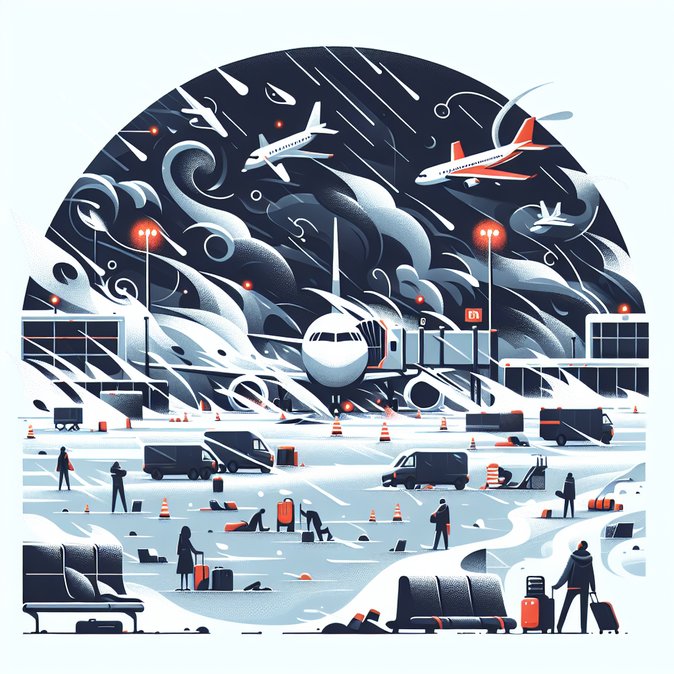
A powerful Atlantic weather system dubbed the “Christmas Cyclone” swept across the peninsula on 25-26 December, forcing Tuscany’s Florence-Peretola Airport to cancel or heavily delay at least seven departures as winds above 70 km/h made take-off unsafe. Airport union representatives told the press that “hundreds of travellers spent hours in the terminal waiting for alternative arrangements,” while airlines activated re-booking and hotel vouchers in line with EU 261/2004 rules.
The National Civil Protection Department simultaneously issued a red-alert for parts of Emilia-Romagna and orange or yellow alerts for five additional regions. Authorities urged motorists to postpone non-essential road travel and railway operator Trenitalia warned of speed restrictions on key high-speed lines between Bologna and Milan. The situation highlights how extreme weather is now a structural mobility risk in Italy: ENAC data show a 28 % year-on-year rise in weather-related aviation disruptions during the 2025 winter season.
![Christmas storm grounds flights at Florence airport and triggers travel warnings across Italy]()
For companies moving staff in and out of Italy during the holiday period, the storm is a reminder to build flexibility into travel policies. HR mobility managers should: 1) ensure travellers are booked on tickets that allow same-day changes without fare penalties; 2) use multi-channel alerting systems that can reach employees via SMS when regional civil-protection notices are updated; and 3) verify that travel-insurance policies cover “extraordinary meteorological events,” which some corporate policies still exclude.
Looking ahead, meteorologists at the University of Bologna expect a second low-pressure front to arrive on 30 December, mainly affecting the north-east. Employers with assignees in Trieste, Venice and Udine should anticipate possible closure of regional airports if Bora winds again exceed 90 km/h.
The National Civil Protection Department simultaneously issued a red-alert for parts of Emilia-Romagna and orange or yellow alerts for five additional regions. Authorities urged motorists to postpone non-essential road travel and railway operator Trenitalia warned of speed restrictions on key high-speed lines between Bologna and Milan. The situation highlights how extreme weather is now a structural mobility risk in Italy: ENAC data show a 28 % year-on-year rise in weather-related aviation disruptions during the 2025 winter season.

For companies moving staff in and out of Italy during the holiday period, the storm is a reminder to build flexibility into travel policies. HR mobility managers should: 1) ensure travellers are booked on tickets that allow same-day changes without fare penalties; 2) use multi-channel alerting systems that can reach employees via SMS when regional civil-protection notices are updated; and 3) verify that travel-insurance policies cover “extraordinary meteorological events,” which some corporate policies still exclude.
Looking ahead, meteorologists at the University of Bologna expect a second low-pressure front to arrive on 30 December, mainly affecting the north-east. Employers with assignees in Trieste, Venice and Udine should anticipate possible closure of regional airports if Bora winds again exceed 90 km/h.
Source: la Repubblica