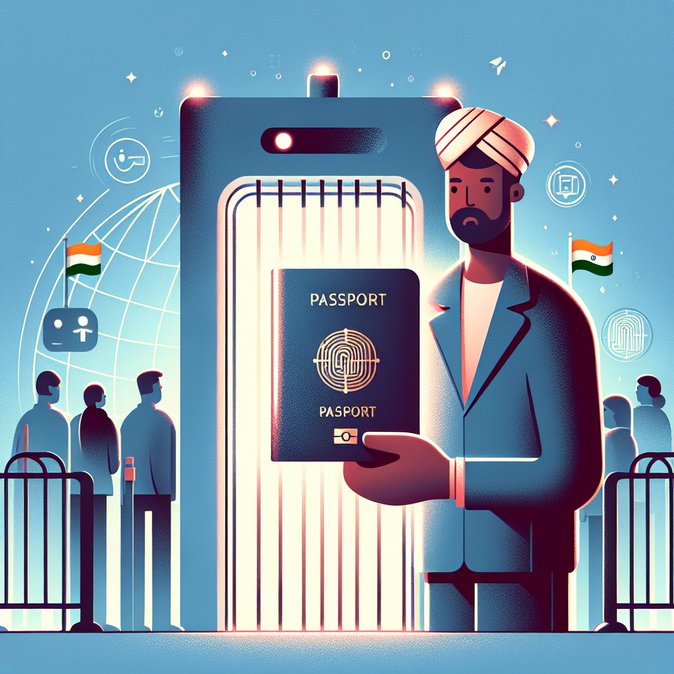
The Ministry of External Affairs’ phased rollout of ICAO-compliant e-passports has entered a new high-volume stage, with applicant data showing a sharp uptick in requests for the biometric booklet since January. A Times of India explainer published on 24 January details three key drivers: enhanced anti-fraud security, faster e-gate immigration processing, and universal compatibility with the automated border systems more countries are installing ahead of the 2026 travel-tech wave.
Launched nationally in April 2024 under Passport Seva 2.0, India’s e-passport contains an encrypted micro-chip storing the holder’s facial image and fingerprints. Officials say 37 regional passport offices are now issuing only e-passports for new or renewed applications, and legacy booklets remain valid until expiry but cannot be ‘upgraded’.
![e-Passport Adoption Surges: Why Indian Travellers Are Opting for Chip-Enabled Passports]()
For frequent-flyer employees on regional rotations the benefit is most visible at Delhi, Mumbai and Bengaluru airports, where automated e-gates slash average arrival-queue times from 25 minutes to under five. Abroad, countries such as Singapore, the UAE and Australia already accept Indian e-passports at their SmartGate lines, offering further time savings.
Mobility teams should advise travellers whose passports expire within the next 18 months to renew early and request an e-passport so they are future-ready for upcoming digital-visa schemes like the UK ETA and EU ETIAS. Companies should also update HRIS systems to capture the new 64-character Machine-Readable Zone format and the 10-year validity start date to avoid check-in glitches.
Launched nationally in April 2024 under Passport Seva 2.0, India’s e-passport contains an encrypted micro-chip storing the holder’s facial image and fingerprints. Officials say 37 regional passport offices are now issuing only e-passports for new or renewed applications, and legacy booklets remain valid until expiry but cannot be ‘upgraded’.

For frequent-flyer employees on regional rotations the benefit is most visible at Delhi, Mumbai and Bengaluru airports, where automated e-gates slash average arrival-queue times from 25 minutes to under five. Abroad, countries such as Singapore, the UAE and Australia already accept Indian e-passports at their SmartGate lines, offering further time savings.
Mobility teams should advise travellers whose passports expire within the next 18 months to renew early and request an e-passport so they are future-ready for upcoming digital-visa schemes like the UK ETA and EU ETIAS. Companies should also update HRIS systems to capture the new 64-character Machine-Readable Zone format and the 10-year validity start date to avoid check-in glitches.
Source: The Times of India