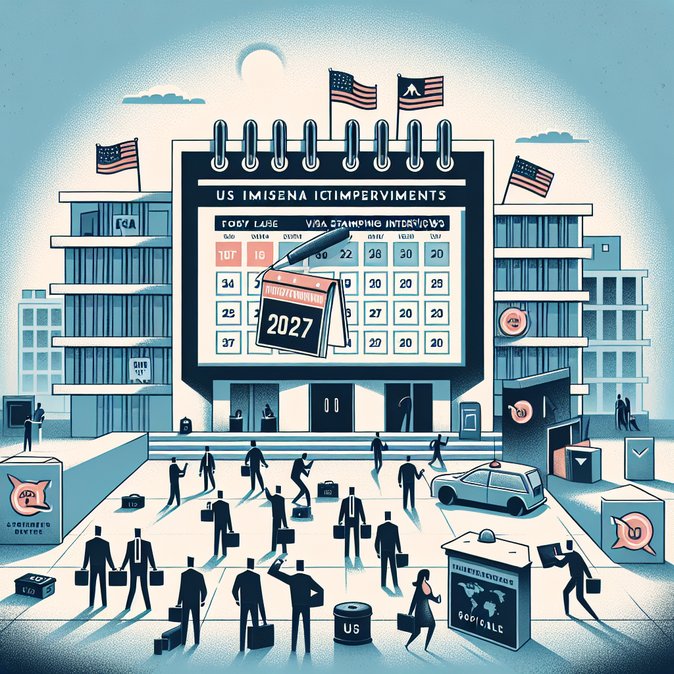
Indian IT specialists, doctors, academics and other H-1B professionals planning mid-career trips home are suddenly discovering that they cannot return to the United States for years. On 25 January 2026 NDTV confirmed that every US consulate in India—Delhi, Mumbai, Chennai, Hyderabad and Kolkata—has run out of regular H-1B stamping appointments until April-May 2027. (ndtv.com)
The backlog snowballed in December 2025 when consular sections began cancelling December slots and re-booking them for March 2026, only to move the same files to October 2026 a few weeks later. A fresh set of internal scheduling changes this week kicked the can even further down the road. Consular officers blame two policy shifts in Washington: (1) mandatory social-media screening for all employment-based visas introduced on 15 December 2025, and (2) the State Department’s decision to abolish “third-country” stamping for Indians, funnelling the entire volume back to the five Indian posts.
Because an H-1B worker who leaves the United States cannot re-enter without a valid stamp, thousands are trapped in India. Immigration lawyers report frantic calls from Fortune 500 clients whose project timelines are slipping as key specialists remain stuck. Some employers have resorted to emergency remote-work waivers; others are relocating urgent work to Canada or Mexico, where Indian staff can live temporarily on intra-company permits.
![US Consulates Push H-1B Visa Interview Dates in India to 2027, Stranding Professionals]()
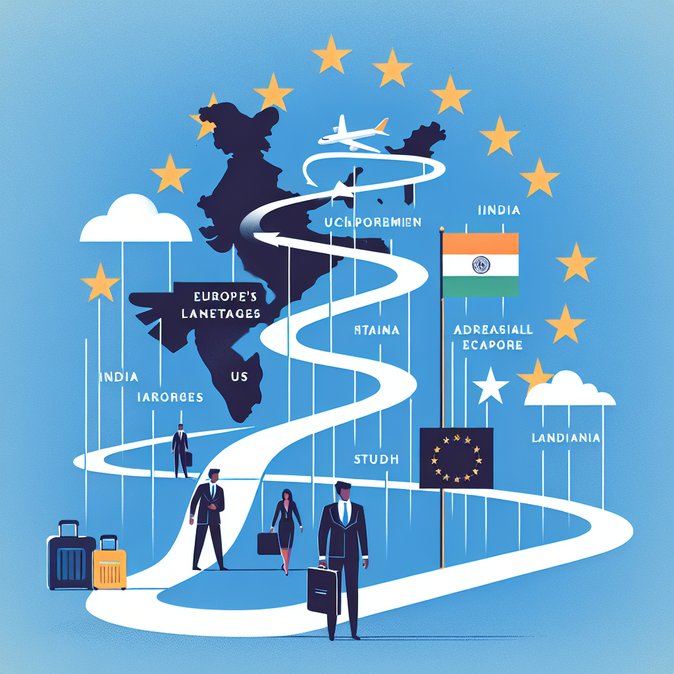
The delays also undercut the Biden administration’s stated goal of attracting STEM talent. “If a mechanical-engineering PhD from IIT can get a German Blue Card in two weeks but has to wait 18 months for a US visa interview, the market will decide,” warns Emily Neumann, partner at Houston-based law firm Reddy & Neumann. She recommends that Indians already in the US postpone non-essential travel, and that companies budget for premium-processing upgrades and legal fees when global mobility plans involve India.
For workers already stranded, options are few. Expedited appointments are theoretically available for medical emergencies, but staffing shortages mean even those requests can take weeks. Congressional staffers from tech-heavy districts are pressing the State Department for temporary drop-box or interview-waiver programs, but no relief has been announced.
Practical takeaway: Indian H-1B holders who must travel in 2026 should build in a one-year buffer—or consider alternative assignments in countries with faster processing—before purchasing that ticket home.
The backlog snowballed in December 2025 when consular sections began cancelling December slots and re-booking them for March 2026, only to move the same files to October 2026 a few weeks later. A fresh set of internal scheduling changes this week kicked the can even further down the road. Consular officers blame two policy shifts in Washington: (1) mandatory social-media screening for all employment-based visas introduced on 15 December 2025, and (2) the State Department’s decision to abolish “third-country” stamping for Indians, funnelling the entire volume back to the five Indian posts.
Because an H-1B worker who leaves the United States cannot re-enter without a valid stamp, thousands are trapped in India. Immigration lawyers report frantic calls from Fortune 500 clients whose project timelines are slipping as key specialists remain stuck. Some employers have resorted to emergency remote-work waivers; others are relocating urgent work to Canada or Mexico, where Indian staff can live temporarily on intra-company permits.
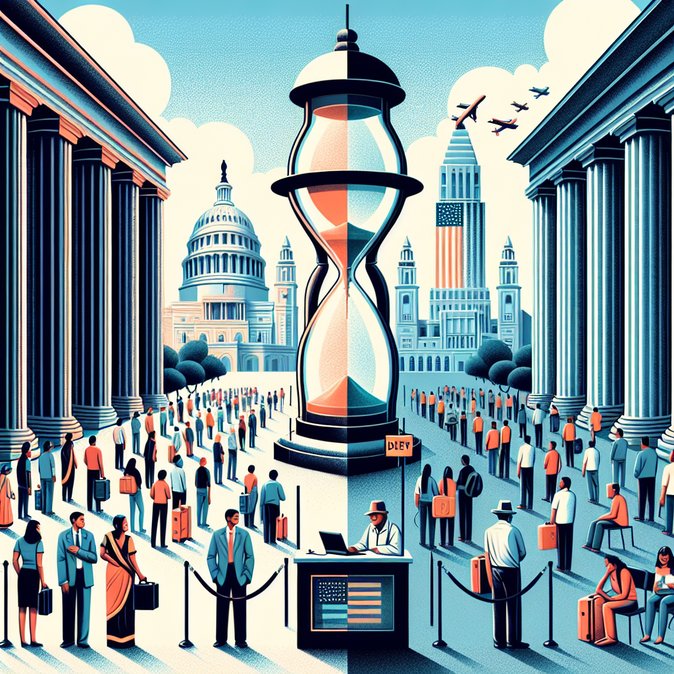
The delays also undercut the Biden administration’s stated goal of attracting STEM talent. “If a mechanical-engineering PhD from IIT can get a German Blue Card in two weeks but has to wait 18 months for a US visa interview, the market will decide,” warns Emily Neumann, partner at Houston-based law firm Reddy & Neumann. She recommends that Indians already in the US postpone non-essential travel, and that companies budget for premium-processing upgrades and legal fees when global mobility plans involve India.
For workers already stranded, options are few. Expedited appointments are theoretically available for medical emergencies, but staffing shortages mean even those requests can take weeks. Congressional staffers from tech-heavy districts are pressing the State Department for temporary drop-box or interview-waiver programs, but no relief has been announced.
Practical takeaway: Indian H-1B holders who must travel in 2026 should build in a one-year buffer—or consider alternative assignments in countries with faster processing—before purchasing that ticket home.
Source: NDTV