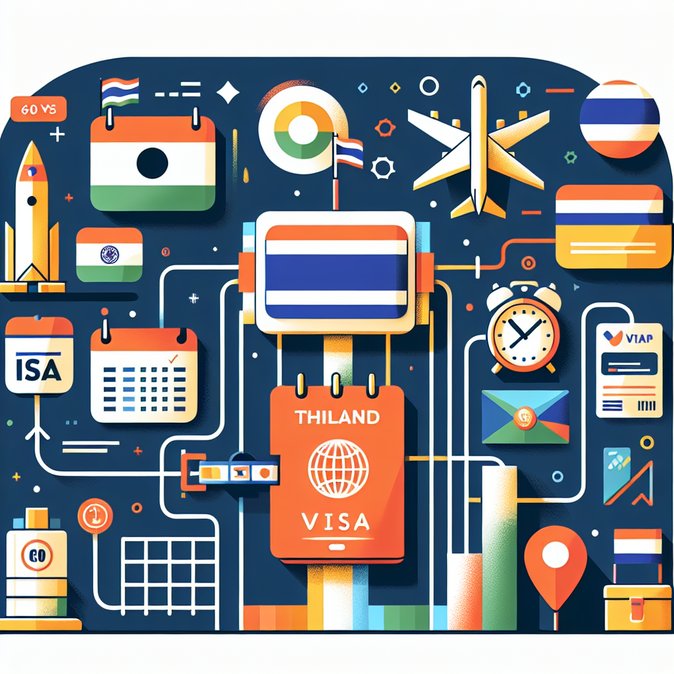
Thailand’s Cabinet, acting on proposals from the Ministry of Foreign Affairs, approved a sweeping rewrite of the kingdom’s visa rule-book on 13 February 2026. Key among the reforms is a 60-day visa-exemption scheme covering 93 nationalities—including India—for tourism, short-term work trips and meetings. The new ceiling doubles the previous 30-day allowance and positions Thailand to compete head-on with Singapore and Malaysia for the lucrative Indian outbound segment. (timesofindia.indiatimes.com)
Bangkok is also rolling out the “Destination Thailand Visa” (DTV), granting up to five-year validity and multiple entries for remote workers, digital nomads and ‘work-from-Thailand’ entrepreneurs. Indian tech freelancers and startup founders—many of whom already use Thailand as a low-tax base—will be able to stay 180 days per visit with simplified online renewal. An upgraded “ED Plus” visa aims to lure Indian students into hybrid study-and-internship programmes, a direct response to falling Chinese enrolments.
![Thailand overhauls visa regime: 60-day visa-free entry and new ‘Destination Thailand Visa’ to court Indian visitors]()
Structural changes matter as much as headline perks. Thailand has slashed non-immigrant visa codes from 17 to seven and expanded its e-Visa platform to every embassy worldwide, ending long queues at Bangkok’s VFS centres in Delhi and Mumbai. A digital arrival card (TDAC) now replaces manual immigration forms, and facial-recognition e-gates are slated for rollout at Phuket, Chiang Mai and the new Suvarnabhumi satellite terminal before the 2026 Diwali travel rush.
For Indian corporates, the implications are immediate: project teams can rotate more frequently without juggling multiple single-entry visas; MICE planners gain a 60-day window to stage conferences; and HR can explore long-stay options for staff relocating to Thai branch offices. Finance departments, however, should note that DTV carries a THB 10,000 (≈ ₹24,000) issuance fee and proof of US $10,000 health insurance. Compliance teams must ensure digital-nomad employees observe Thailand’s still-strict work-permit laws when engaging in on-shore economic activity.
Tourism analysts predict India—already Thailand’s second-largest source market—could send 2.3 million visitors in FY 2026-27, surpassing pre-COVID highs and injecting an extra US $2 billion into Thai hospitality. The easier rules also dovetail with Air India and IndiGo capacity upgrades on the Delhi–Bangkok and Bengaluru–Phuket sectors announced for the summer schedule, promising a virtuous cycle of seats and demand.
Bangkok is also rolling out the “Destination Thailand Visa” (DTV), granting up to five-year validity and multiple entries for remote workers, digital nomads and ‘work-from-Thailand’ entrepreneurs. Indian tech freelancers and startup founders—many of whom already use Thailand as a low-tax base—will be able to stay 180 days per visit with simplified online renewal. An upgraded “ED Plus” visa aims to lure Indian students into hybrid study-and-internship programmes, a direct response to falling Chinese enrolments.

Structural changes matter as much as headline perks. Thailand has slashed non-immigrant visa codes from 17 to seven and expanded its e-Visa platform to every embassy worldwide, ending long queues at Bangkok’s VFS centres in Delhi and Mumbai. A digital arrival card (TDAC) now replaces manual immigration forms, and facial-recognition e-gates are slated for rollout at Phuket, Chiang Mai and the new Suvarnabhumi satellite terminal before the 2026 Diwali travel rush.
For Indian corporates, the implications are immediate: project teams can rotate more frequently without juggling multiple single-entry visas; MICE planners gain a 60-day window to stage conferences; and HR can explore long-stay options for staff relocating to Thai branch offices. Finance departments, however, should note that DTV carries a THB 10,000 (≈ ₹24,000) issuance fee and proof of US $10,000 health insurance. Compliance teams must ensure digital-nomad employees observe Thailand’s still-strict work-permit laws when engaging in on-shore economic activity.
Tourism analysts predict India—already Thailand’s second-largest source market—could send 2.3 million visitors in FY 2026-27, surpassing pre-COVID highs and injecting an extra US $2 billion into Thai hospitality. The easier rules also dovetail with Air India and IndiGo capacity upgrades on the Delhi–Bangkok and Bengaluru–Phuket sectors announced for the summer schedule, promising a virtuous cycle of seats and demand.
Source: The Times of India