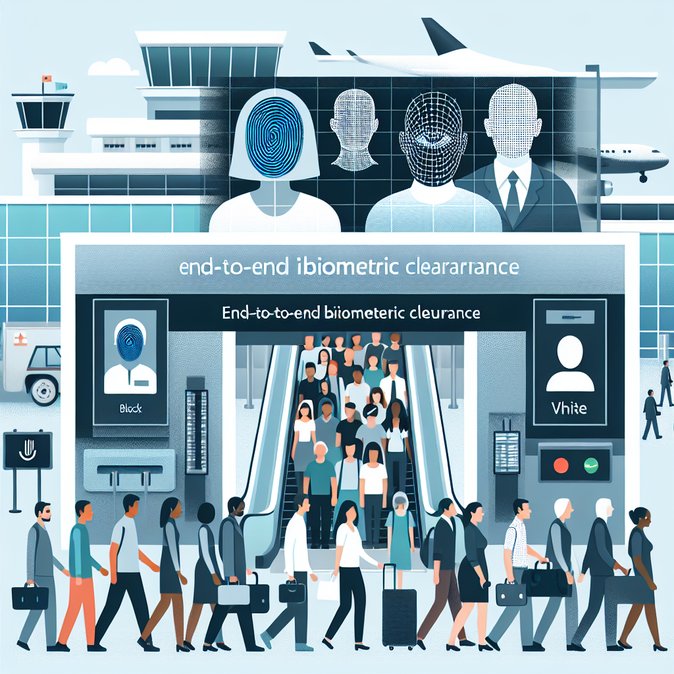
Abu Dhabi has quietly achieved a world first: passengers can now walk from curbside to boarding gate without showing a single document. On 7 May the emirate’s Zayed International Airport switched on full-scale facial-and-iris recognition corridors across every terminal, allowing outbound and transit travellers to clear immigration in just seven seconds, down from the previous 25-second average. The Smart Travel platform, developed with local AI specialist Next 50 and the Federal Authority for Identity, Citizenship, Customs & Port Security (ICP), automatically cross-checks live biometrics against government databases while the traveller keeps moving. The rollout marks the third and final phase of a project that began with limited departure e-gates in 2024 and arrivals testing in late-2025. Five of the hub’s nine immigration checkpoints are now fully biometric; the remaining four will be converted by July and sister airports at Al Ain, Delma, Sir Bani Yas and Al Dhafra will adopt the system before year-end. For corporate mobility teams, the change promises faster connections through Abu Dhabi’s growing transfer bank and less risk of misconnections on complex itineraries routed through the Gulf. Airlines report boarding-gate dwell times have already fallen by a quarter in the first 24 hours of live operations, freeing up scarce peak-hour slots and opening headroom for additional frequencies once regional airspace stabilises. Privacy advocates note that ICP’s database now receives live passenger data from both airlines and airport sensors; officials insist all records are encrypted and retained under the 2022 Personal Data Protection Law. Travellers do not need to pre-register—biometrics are captured passively—yet those wishing to opt out must use legacy manual lanes, which remain available but markedly slower. In a region where hubs compete fiercely on passenger experience, Abu Dhabi’s leap could force rivals in Dubai, Doha and Riyadh to accelerate their own biometric roadmaps. For now, Zayed International offers the Gulf’s slickest border crossing—and sets a new benchmark for airports worldwide.
Source: Noticias.ae