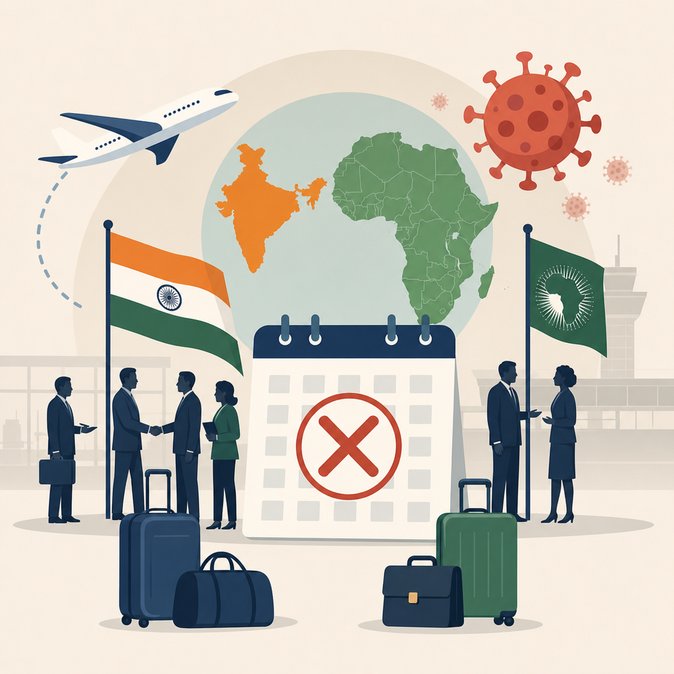
Just a week before heads of state were due to converge on New Delhi, India and the African Union jointly announced on 21 May that the Fourth India–Africa Forum Summit (IAFS-IV) will be deferred to a later date because of the Ebola outbreak in parts of Africa. The high-profile event, originally scheduled for 28-31 May, was expected to draw 54 African leaders, thousands of delegates and a heavy contingent of business executives. Officials said the decision came after consultations with Africa CDC and national health ministries, emphasising the need for “full participation without public-health constraints.” India has offered logistical support and vaccine supplies to affected countries and promised to reschedule once the situation stabilises. For mobility planners, the postponement triggers a cascade of flight cancellations, hotel re-bookings and visa withdrawals. The Ministry of External Affairs confirmed that summit-linked visa facilitation counters at major airports will stand down, and special landing permits for charter flights have been revoked. Corporates that had aligned board meetings and supply-chain MoUs with the summit must recalibrate timelines. Event-management firms estimate sunk costs of ₹120 crore across venues, security contractors and inbound charter services. Airlines including Air India and Ethiopian Airlines are offering date changes without penalty for summit-tagged PNRs. Travel-risk consultants urge companies to review force-majeure clauses in vendor contracts and ensure staff travelling to sub-Saharan Africa have robust medical-evacuation cover. Diplomats insist the postponement does not signal political strain, but observers note it highlights how health crises can abruptly derail high-level mobility and trade diplomacy. The episode underscores the importance for global-mobility teams of scenario planning that spans visas, health alerts and cross-border logistics.
Source: Hindustan Times