Spain’s Supreme Court Keeps Landmark Migrant Regularisation Decree Alive
Hong Kong International Airport unveils expanded Terminal 2, promises smoother summer travel
Italy’s “Single Permit” for Foreign Workers Enters Into Force, Slashing Post-Arrival Processing to 30 Days
Latest News

Canada Drops Visa Requirement for Brazilian Visitors From July 15
Ottawa announced on 22 May that Brazilians will soon be able to enter Canada visa-free for tourism or short business trips, needing only an inexpensive electronic travel authorisation from 15 July 2026. The change is expected to boost leisure and MICE traffic, prompting airlines to add capacity and forcing companies to revise travel-compliance procedures.

Finland Doubles Path to Permanent Residence to Six Years & Adds Language Test
Finland’s immigration authority is now applying a six-year residence requirement, an A2 Finnish/Swedish language test and a two-year work-history rule to all permanent-residence applications filed from 8 January 2026. Exemptions exist for high earners, post-graduates and applicants with native-level language skills, but most migrants must add two extra years to their long-term plans. Companies need to budget for language training and longer assignment cycles, while low-wage migrants face a significantly tougher path.

Emirates urges passengers to arrive 3 hours early as Eid Al Adha exodus looms
Emirates expects holiday-period departures to spike from 24 May and, on 22 May, urged passengers to arrive three hours early, complete immigration formalities well ahead of take-off and use digital check-in to avoid bottlenecks. Road congestion is forecast, so Metro or chauffeur-drive options are advised. The guidance is the first stress-test of Dubai’s restored flight network after spring air-space closures and is critical information for companies moving staff in or out during the Eid break.

Belgium offers partner-residence route without marriage: Statutory Cohabitation Visa explained
A Brussels Times deep-dive sets out how Belgium’s statutory cohabitation visa lets unmarried foreign partners join their Belgian significant other without getting married. Applicants enter on a short- or long-stay visa, sign a legal cohabitation declaration, and progress from an orange card to a five-year F-card once police and income checks are complete. The route gives multinationals an alternative family-reunification option but requires precise documentation and patience with municipal bureaucracy.

Geneva Braces for G7 Summit: Switzerland Re-imposes French Border Checks & Tweaks Airport, Public Transport Operations
Switzerland will reinstate border checks with France, limit secondary crossings and modify airport and public-transport operations from 10–19 June to secure the nearby G7 summit. Business travellers should expect longer queues, reduced bus and tram frequencies and stricter document checks. The disruption highlights the fragility of Schengen freedom of movement for cross-border commuters on whom Geneva’s labour market depends.

China extends 30-day visa-free entry for Russian citizens until 2027
At a 22 May 2026 press conference, China confirmed that ordinary Russian passport-holders will keep their 30-day visa-free access until 31 December 2027. The multi-year extension removes uncertainty for businesses and is expected to lift cross-border trade, tourism and short-term technical assignments. Corporates still need work visas for paid employment and should monitor tax triggers for longer stays.

Cyprus rolls out pilot online system for renewing residence permits
Cyprus’ Migration Department has launched a pilot e-service that allows certain foreign residents to renew their residence permits completely online. The portal cuts paperwork, halves processing times, and gives companies real-time visibility on employee status—critical for business travellers and HR teams managing expatriate staff. It is the first phase of a broader digital-transformation plan that will extend to more permit categories later this year, reinforcing Cyprus’ competitiveness as a headquarters location.

Czech and Austrian Interior Ministers Chart Post-2027 Future for Ukraine Temporary Protection Holders
On 22 May 2026 Czech interior minister Lubomír Metnar met Austrian interior minister Gerhard Karner in Prague to discuss what happens when the EU’s Temporary Protection Directive for Ukrainians ends on 4 March 2027. Both countries will push the EU to create a conversion pathway from temporary protection to national residence permits so employers can retain Ukrainian staff without costly re-applications. The ministers also pledged deeper border-management cooperation and faster roll-out of Schengen digital entry/exit systems.

Germany makes Opportunity Card applications 100 % digital to cut visa backlogs
From 22 May 2026 all Opportunity Card (Chancenkarte) visa applications must be lodged through a new Consular Service Portal. The fully digital process replaces the patchwork of e-mail requests and in-person appointment hunts, allowing applicants to upload documents, pay fees and book biometrics online. Berlin expects the move to shrink processing times from six months to roughly two and a half, giving employers faster access to global talent.

Government Launches Job-Matching Platform for Newly Regularised Migrants
The Migration Ministry will create a digital platform that pairs migrants granted legal status under Spain’s new amnesty with vacancies in shortage occupations. The system, announced on 22 May, aims to move hundreds of thousands from the informal economy into formal jobs, boosting tax and social-security income while easing labour gaps in construction, tourism, transport and care. Employers gain faster access to talent; migrants receive targeted integration and training support.
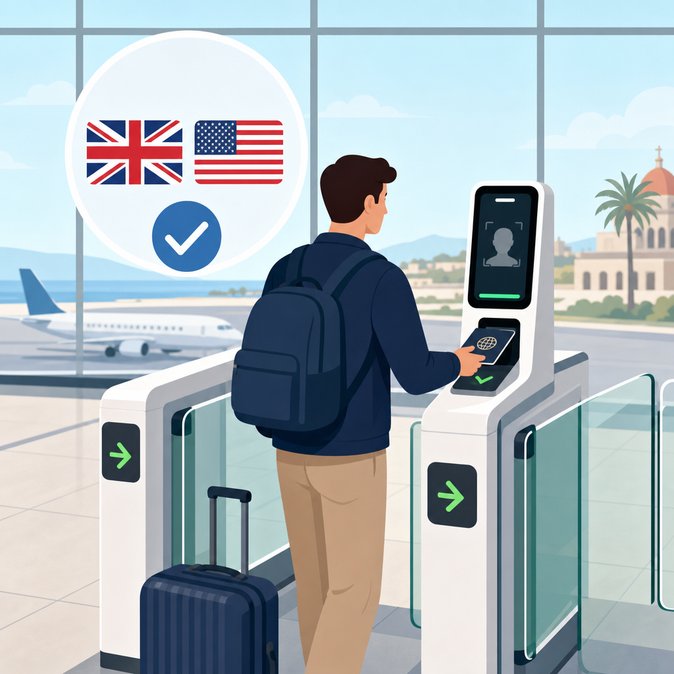
Nice Côte d’Azur Airport extends PARAFE e-gate use to UK and US citizens
Nice Airport is now letting British and American passport holders use PARAFE e-gates, a first for non-EU nationals in France since EES rules took effect. The move reduces queues while full biometric kiosks are delayed, offering faster processing but with limits and no guarantee at other airports. Mobility teams should adjust travel guidance accordingly.

Ireland expands Employment Permit Occupations Lists as new regulations take effect
Statutory Instrument 213/2026 took effect on 22 May 2026, adding four occupations to Ireland’s Critical Skills list, removing five from the ineligible list and introducing new permit quotas. The move widens recruitment options for sectors facing acute shortages and aligns with higher salary thresholds introduced in March. Employers should audit workforce plans, update salaries and file early for quota-limited roles.

Poland returns 14 irregular migrants intercepted on the green border with Lithuania
Polish Border Guard units stopped 14 migrants from Pakistan and Afghanistan who crossed from Lithuania on 21-22 May 2026 and returned them to Lithuanian officials the same day. The interception underscores Warsaw’s growing focus on the Polish-Lithuanian corridor as smugglers shift routes away from the fortified Belarusian frontier, and signals continued internal border checks that can delay legitimate travel and cargo flows.
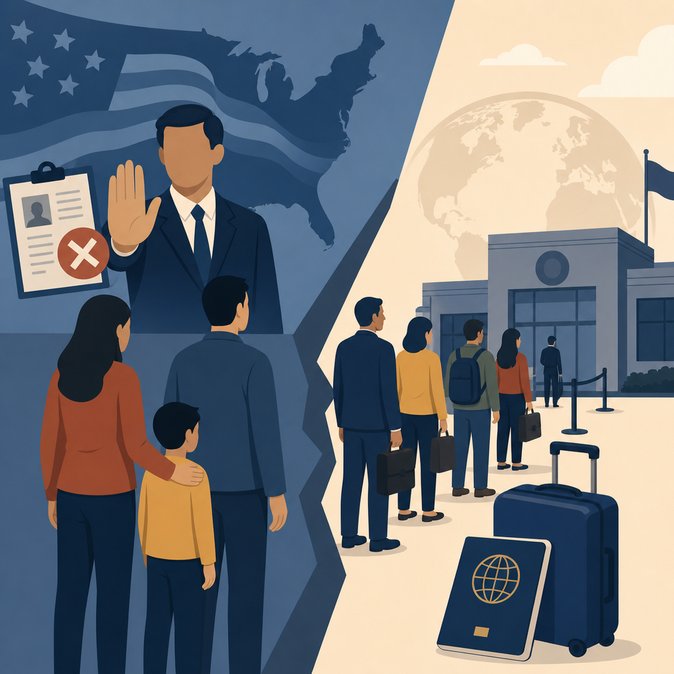
USCIS upends decades-old practice, tells most green-card applicants to apply from abroad
USCIS declared on 22 May 2026 that Adjustment-of-Status will be granted only in exceptional cases, forcing most foreign nationals in the U.S. to leave the country and apply for their green card at a consulate abroad. The policy threatens to separate families, lengthen corporate transfer times, and create new legal battles, marking the Trump administration’s most far-reaching restriction on legal immigration to date.

ACT Raises the Bar: Latest Invitation Round Shows Record Matrix Scores for Skilled Migrants
ACT’s 22 May update shows invitation cut-offs as high as 135 points for certain occupations, the toughest since the Matrix began. Rising competition and a federal on-shore focus mean offshore applicants face longer odds, forcing businesses and migrants to rethink sponsorship and points-boosting strategies.

Bank-holiday bottleneck: Dover-to-France ferries slowed by manual EES checks
French border guards at Dover required manual EES processing on 22 May, creating two-hour waits for car passengers heading to France during the bank-holiday rush. With biometric kiosks still pending, employers should factor longer ground-transport buffers or consider alternative crossings.

Brazil’s Ministry of Labor Issues Comprehensive Foreign-Worker Guide
A detailed 40-page guide for foreign workers released on 22 May summarises Brazil’s work-permit processes, CTPS Digital rules and labour-law rights. The publication arrives amid tighter ministry audits and gives HR teams a ready checklist to keep expatriate assignments compliant and penalty-free.