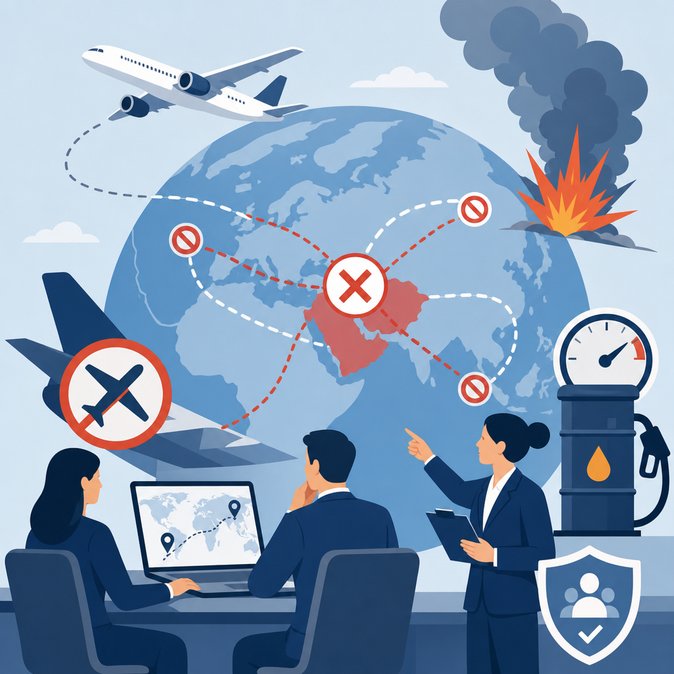
The Department of Foreign Affairs and Trade (DFAT) updated its Smartraveller portal on 22 May 2026 with a ‘Global Alert’ warning Australian travellers that escalating conflict in the Middle East is triggering worldwide aviation and fuel-supply disruptions. The bulletin urges Australians—even those not travelling to the region—to expect flight cancellations, airspace closures and higher travel costs. DFAT notes that several Middle-East hubs, including Bahrain, Kuwait and Qatar, are now at ‘Level 4 – Do Not Travel’ for transit purposes, while neighbouring airspaces face temporary closures that compel airlines to reroute long-haul services. Knock-on effects include shortages of jet fuel at Asian and European airports, higher ticket prices and unpredictable arrival slots for cargo—issues already being felt by Australian exporters of perishables. Corporate travel managers are advised to conduct route-risk assessments before booking and to include fuel-surcharge clauses in travel budgets. The alert also reminds Australians to check their ‘Genuine Student’ or temporary work-visa conditions: overstaying a visa because of cancelled flights could breach visa validity and lead to future refusals. Travellers are encouraged to subscribe to Smartraveller updates, review insurance coverage for war- or conflict-related disruptions and maintain flexible itineraries. The advisory comes days before the start of the northern-summer peak season, when tens of thousands of Australian business travellers ordinarily transit Gulf hubs en route to Europe and Africa. Airlines are scrambling to secure alternate fuel uplifts in Singapore, Delhi and Perth, and some carriers are adding technical stops in Darwin or Broome. Logistics analysts warn that supply-chain delays could linger into Q3 2026 if the conflict—and sanctions on oil exports—further tightens global fuel markets. For global-mobility teams, the key action items are: audit current assignee itineraries that cross the Middle East, brief expatriates on contingency routes, and ensure emergency contact protocols are up to date. Failure to plan could leave staff stranded or expose companies to duty-of-care liabilities.
Source: Smartraveller (DFAT)