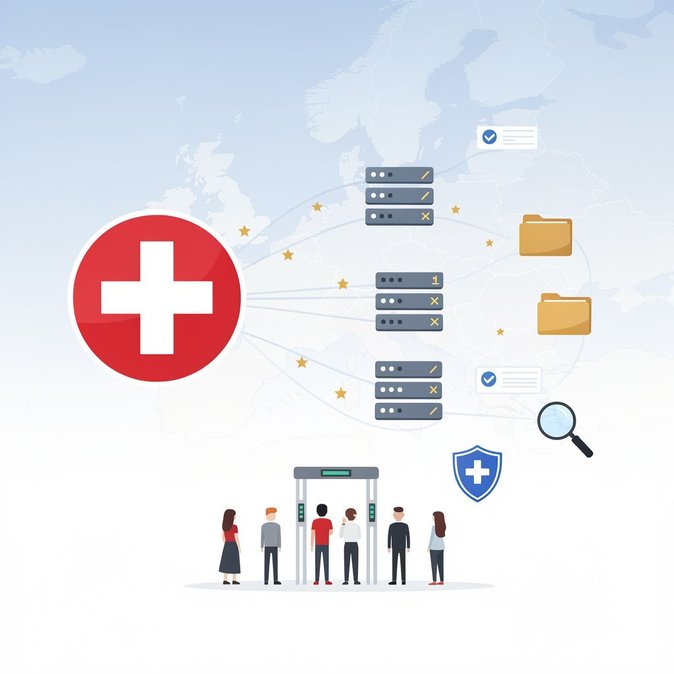
Coinciding with the Migration Pact’s start date, Switzerland has activated its Ordinance on the Interoperability of Schengen/Dublin Information Systems (IOSDV). Police, border and migration authorities can now perform a single query across the Visa Information System (VIS), Entry/Exit System (EES), ETIAS, the Schengen Information System (SIS) and certain INTERPOL files, thanks to the EU’s common search portal and biometric-matching engine. The step promises faster identity verification, early detection of multiple or false identities and more reliable security vetting for work-permit applicants. Four technical components—ESP, CIR, sBMS and MID—will be phased in until 2028, but Switzerland’s legal framework is now fully in force. For HR and global-mobility teams, the immediate benefit is a potential reduction in processing times for national visas (D) and Schengen C visas, as authorities no longer have to query databases sequentially. However, the unified search also means that inconsistencies (e.g., outdated passport numbers) are more likely to trigger alerts, so employers should double-check data accuracy before submission. Because interoperability is classified as a Schengen “development”, Switzerland had to transpose the EU regulations verbatim, illustrating the country’s obligation to keep its migration IT architecture in lock-step with Brussels despite remaining outside the Union.