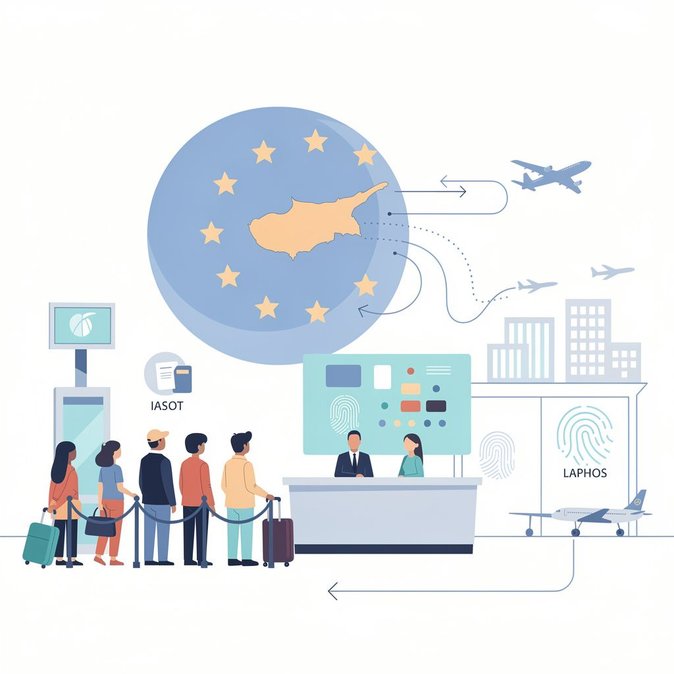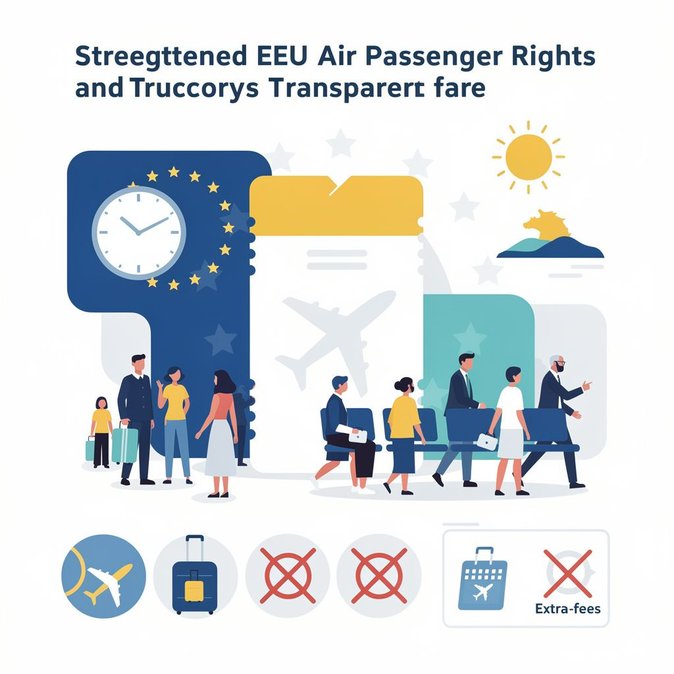
Negotiators in Brussels have inched closer to the first major update of EU air-passenger-rights rules in almost two decades, after the Cyprus Presidency of the Council secured backing from more than 80 percent of member states for a compromise text on 12 June. Should the European Parliament’s Conciliation Committee endorse the package in Strasbourg on 15 June—as Cypriot diplomats expect—the agreement will close one of the longest-running legislative sagas in EU transport law. Key provisions include harmonised compensation levels of €250–€600 for delays of three hours or more, mandatory price transparency that forces airlines to advertise fares inclusive of hand-luggage, and a ban on extra fees for families wishing to sit together. The deal also clarifies that crew illness and generic safety problems cannot be invoked as ‘extraordinary circumstances’ to avoid payouts—closing a loophole that had fuelled thousands of court cases. From a mobility perspective, the size of under-seat bags will be standardised at 40 × 30 × 15 cm, while cabin bags for overhead bins will remain dimension-free but must be included in the headline ticket price. Airlines failing to issue compensation instructions within 96 hours of a disruption could face enforcement action from national regulators. Spain signalled last-minute opposition over luggage rules, but insiders say Madrid lacks a blocking minority. For companies moving talent through Larnaca or Paphos, the rules promise clearer cost forecasting: hand-luggage charges will no longer appear as hidden extras, and duty-of-care teams will gain fixed benchmarks for re-routing or hotel obligations during disruptions. Travel-policy managers should review contract clauses with preferred carriers to reflect the new compensation scales and ensure that traveller-tracking tools capture the 96-hour notification window.
Source: Agence Europe