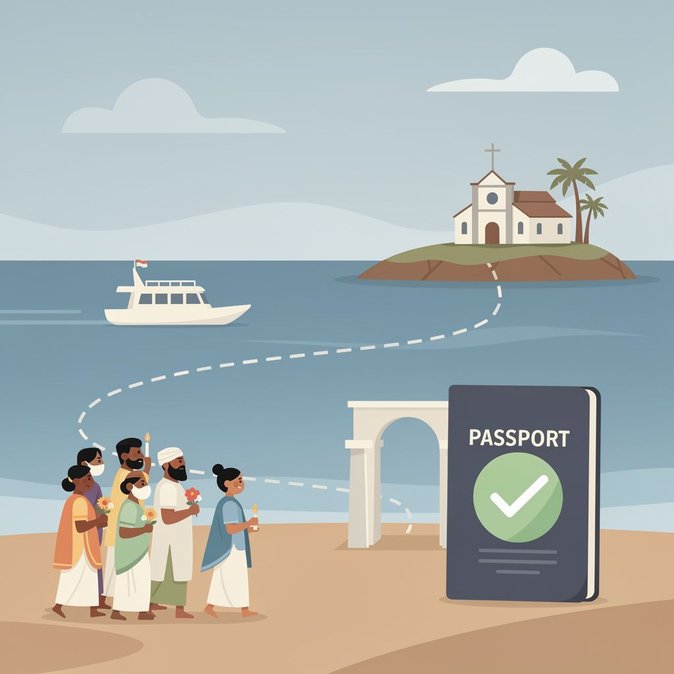
A background brief circulated by the Ministry of External Affairs on 20 June 2026—cited in multiple current-affairs digests—reaffirmed that Indian pilgrims visiting the annual two-day St Anthony’s festival on Sri Lanka’s Katchatheevu Island do not require passports or visas. The note, part of a larger explainer on India-Sri Lanka maritime boundaries, underscores that the 1974 and 1976 bilateral treaties guarantee “unrestricted access” for devotees, subject only to advance nominals lists shared with the Sri Lankan Navy. The clarification comes amid renewed political debate in Tamil Nadu over historical sovereignty claims. For mobility planners, the document removes ambiguity for tour operators arranging chartered boats from Rameswaram: guests need only photo ID and medical certificates, while India’s Coast Guard provides search-and-rescue cover. Although the pilgrimage is niche (about 5,000 attendees last season), it illustrates how treaty-based mobility corridors can coexist with otherwise strict visa regimes. Companies running CSR or faith-tourism programmes in the Palk Strait region can leverage the waiver to design short, hassle-free itineraries that combine Katchatheevu with Jaffna heritage circuits now accessible via the Jaffna–Chennai air bubble. Security agencies note that biometric enrollment is impractical on the uninhabited islet; instead, both navies rely on boat-manifest checks and on-site wristbands. Operators remain liable for medical evacuations in case of dehydration or rough seas—risks that intensified in 2025 when cyclone-driven swells forced last-minute cancellations.