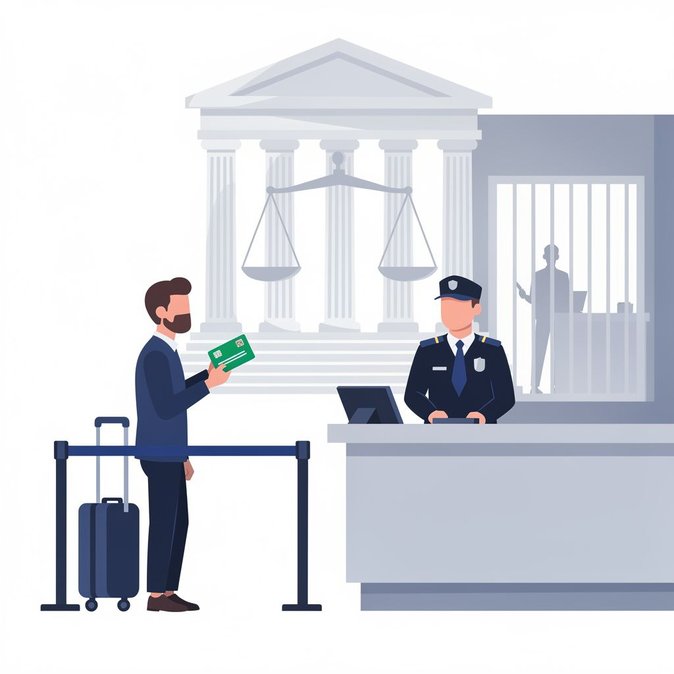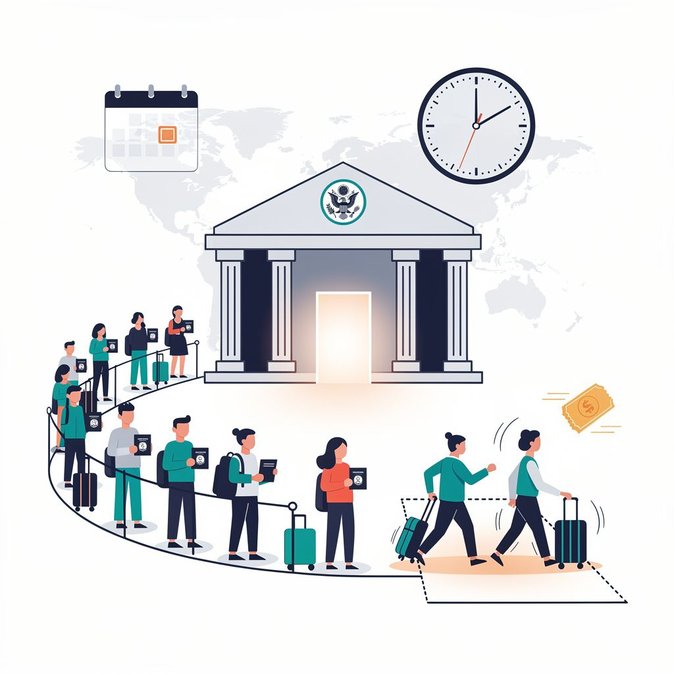
The U.S. Department of State has published a Temporary Final Rule creating an optional $750 fee that guarantees non-immigrant visa (B-1/B-2) applicants an interview appointment within ten business days. The six-month pilot—announced June 23 and set to run July 1 through December 31—aims to test whether premium processing can reduce record-high global backlogs without diverting consular resources from standard queues. Travel & Tour World reports that demand is especially strong in India, Canada, Nigeria, Ghana and the UAE, where wait times for first-time visitor visas often exceed 250 days. By paying the surcharge after submitting the regular $185 Machine-Readable Visa (MRV) fee, applicants can bypass the normal scheduling system and receive a slot within ten business days at participating consulates. The premium is non-refundable even if a traveler later cancels or is denied a visa. Business-travel managers welcome a mechanism to secure critical client-meeting or project-launch time-lines but warn of equity implications: smaller firms may struggle to absorb nearly $1,000 in upfront fees per traveler ($185 + $750). Immigration lawyers also note that security clearances, administrative processing and passport-return times are *not* expedited under the pilot, meaning total turnaround could still exceed two weeks. If the experiment succeeds, officials may expand the pay-to-skip model to work visas, raising questions about a two-tiered consular system. Observers point to Canada’s payment-for-priority model and the United Kingdom’s long-standing super-priority visa as evidence that such schemes can coexist with regular service—provided transparency and capacity safeguards are in place. Multinationals should update travel-budget forecasts and decide which traveler categories—executives, revenue-critical sales staff, or field-engineers—qualify for premium spend. Companies must also track pilot metrics; if high uptake overwhelms mission capacity, the ten-day guarantee could erode.
Source: Travel & Tour World