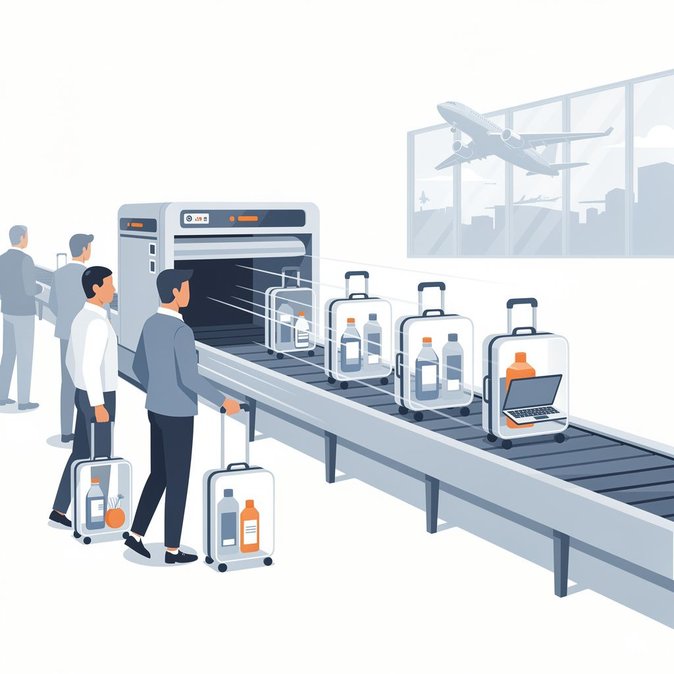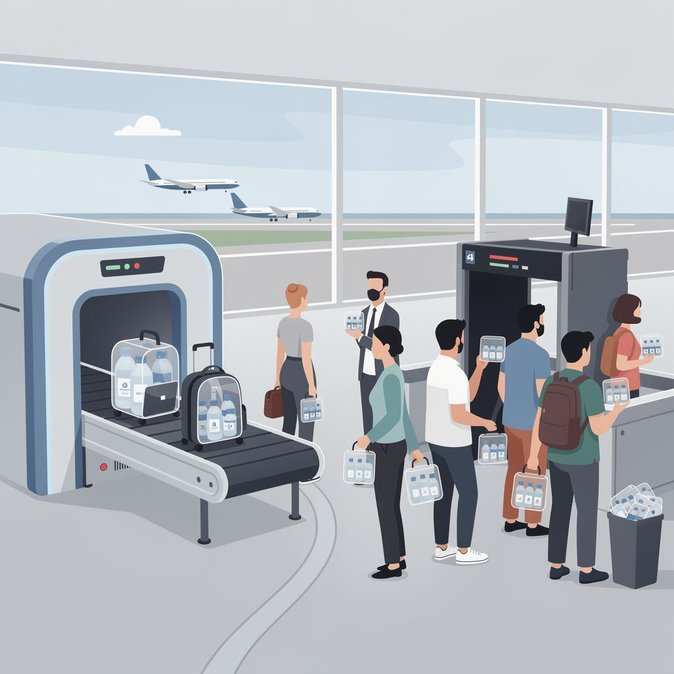
From 26 June 2026, passengers starting their journey at Zurich Airport can keep liquids of up to two litres as well as laptops inside their hand luggage thanks to a fleet of 26 computed-tomography (CT) scanners that generate high-resolution 3-D images for security staff. The CHF 34 million upgrade brings Zurich in line with Heathrow, Schiphol and Madrid, which have already relaxed the two-decade-old restriction introduced after the 2006 liquid-explosives plots. The new rule applies only to origin-departing travellers screened in the main Security Control Building; transfer passengers must still respect the 100 ml limit until the transit checkpoints are refitted later this year. No changes are planned yet at Geneva, Basel-Mulhouse or Bern airports, so return legs may still be subject to traditional rules—travellers should check local regulations. Airport operator Flughafen Zürich AG expects the scanners to cut average security-queue times by 30 percent during the July-August peak and reduce plastic-bag waste by 400 tonnes a year. Airlines welcomed the move: Swiss International Air Lines predicts faster boarding and fewer flight delays caused by secondary bag searches, while easyJet aims to re-time ground-handling windows. For corporate travel managers, Zurich’s change simplifies packing guidelines for road warriors bringing product samples, medical devices or baby food. However, duty-of-care policies should remind staff that other European hubs may still confiscate large bottles on the return trip. Travel-approval workflows and mobile booking tools must therefore flag airport-specific rules until CT technology is standard across Schengen. The step also signals an acceleration of security modernisation in Switzerland ahead of the EU’s Entry/Exit System (EES) and ETIAS roll-outs. CT lanes generate richer data, enabling algorithmic risk-profiling and potentially integrating with biometric border-controls, which could further streamline—but also scrutinise—frequent flyers.
Source: The Local Switzerland