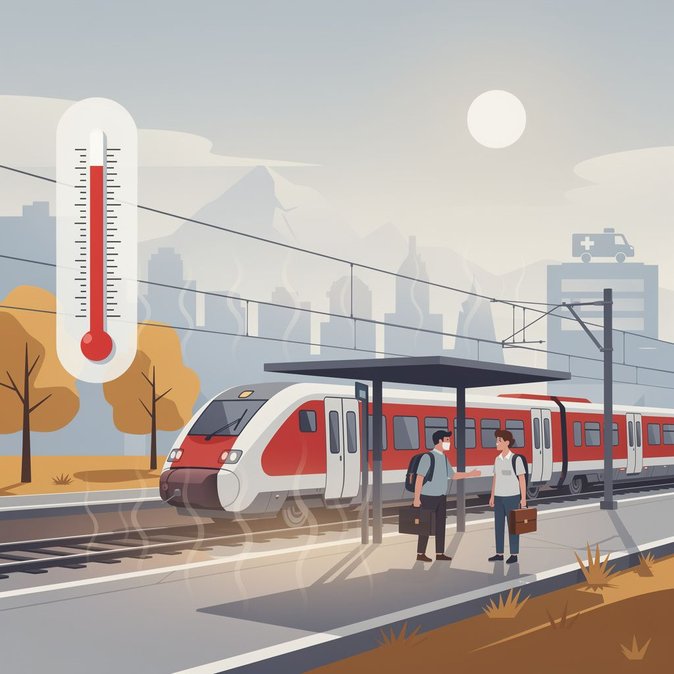
An Associated Press roundup of the pan-European heatwave reports that temperatures in Basel climbed to 38.8 °C on Saturday, 27 June, while Denmark (37 °C) and the Czech Republic (40.6 °C) also smashed national June records. Deutsche Bahn and partner railways—including SBB Cargo—issued rare weekend advisories urging passengers to defer all but essential journeys. Swiss impacts came swiftly. The north-south Gotthard axis experienced multiple track-circuit failures, requiring a 30-minute total closure during the Saturday afternoon peak. Emergency services in Basel counted 43 heat-related incidents around the SBB station, mostly international travellers queuing for delayed ICE and TGV services without shade. Road freight and relocation shipments were also disrupted: Germany’s A2 Autobahn buckled outside Berlin, prompting Swiss hauliers to re-route via Austria, adding six hours to Zurich–Hamburg removal consignments. The episode underscores the growing intersection between climate events and cross-border mobility planning. Mobility managers are being encouraged to integrate climatic trigger points—heat, flood, wildfire—into travel-approval workflows and supplier SLAs, mirroring the pandemic-era approach to health alerts. Swiss insurers (Helvetia, AXA) estimate that each degree above 35 °C raises transport-infrastructure claims by 6–7 %, a trend likely to feed through to higher policy premiums for travel-risk cover in 2027.