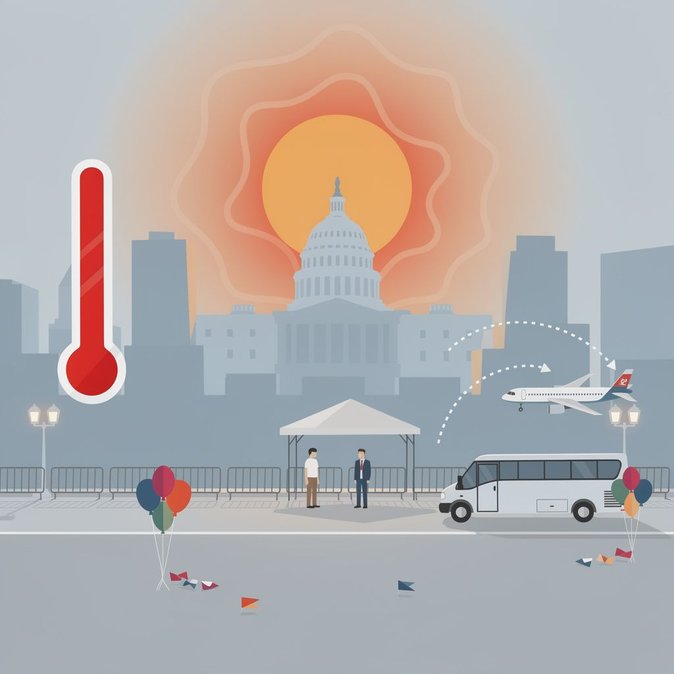
For the first time in its half-century history, America’s Independence Day Parade in Washington, D.C. has been canceled—not for security reasons, but because the National Weather Service projects heat-index values between 110°F and 115°F on July 4. District officials announced the decision late on July 3 after consulting with National Park Service, Metropolitan Police and medical teams, citing participant safety and the risk of heat-stroke among the 200,000 spectators who typically line Constitution Avenue. The cancelation immediately rippled through the capital’s tourism and mobility ecosystem. Dozens of charter-bus companies that bring veterans’ groups and marching bands to the parade scrambled to reroute or refund customers, while hotel concierges dealt with a spike in same-day room cancellations. The Secret Service adjusted temporary flight-restriction (TFR) windows around Reagan National and Dulles airports, prompting airlines to tweak schedules and warning general-aviation pilots of expanded “heat contingency” airspace. Federal agencies hosting naturalization ceremonies pivoted online or indoors. USCIS moved a 500-person oath event from the National Mall to the Theodore Roosevelt Building, and the State Department condensed its Passport Fair to a two-hour window to minimize outdoor queuing. Corporate relocation managers with transferees slated to arrive over the long weekend should anticipate heavier-than-normal demand for ride-share vehicles and heat-related metro slowdowns; WMATA says rail cars will run at reduced speeds when rail temperatures exceed 135°F. While the parade itself will not be rescheduled, D.C.’s Homeland Security and Emergency Management Agency says fireworks on the Mall will proceed if wet-bulb temperatures fall below 88°F by nightfall. Travelers should pack extra water, expect bag checks and re-confirm flight times, as some airlines have enacted flexible rebooking policies for July 3–5 travel to DCA, IAD and BWI.