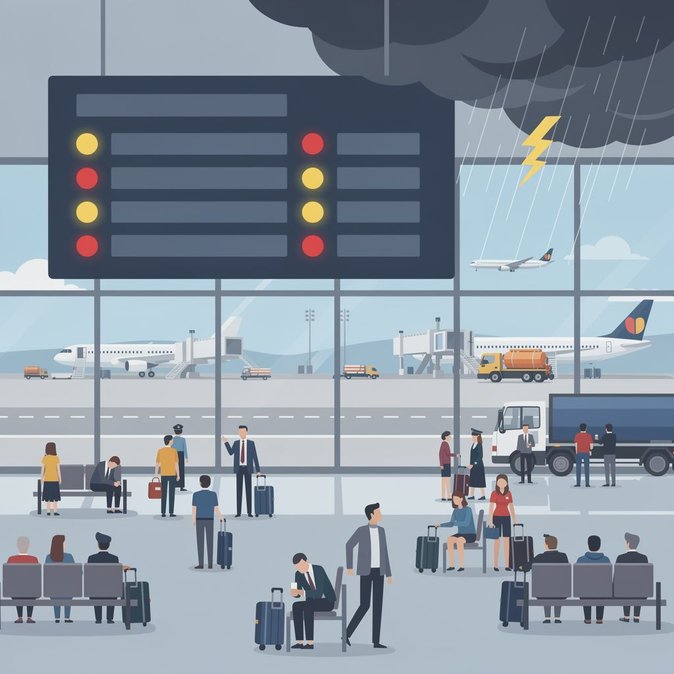
Air travel across the United States descended into what aviation forums dubbed “Chaos Day 97” on 6 July, with 1,055 cancellations and roughly 7,250 delays logged by FlightAware before midnight. The disruptions—among the worst this summer—followed a perfect storm of severe weather, a fuel-system failure at Boston Logan and post-holiday crew shortages. Thunderstorms that rolled across the Midwest and Northeast on Independence Day triggered Federal Aviation Administration ground-delay programmes at Chicago O’Hare, Newark and Philadelphia, paralyzing hub operations just as airlines were operating near 100 percent capacity to meet record demand. In Boston, a late-evening failure in the airport’s central fuel farm caused a multi-hour ground stop that left dozens of aircraft parked without fuel and forced diversions to Manchester and Providence. American, United and Southwest bore the brunt, but regional affiliates such as Endeavor and Republic saw cascading schedule failures as out-of-position aircraft and timed-out crews rippled through Monday’s operations. Travellers reported four-hour customer-service lines, scarce hotel rooms and skyrocketing one-way car-rental prices as they searched for alternatives. The chaos underscores two structural challenges: U.S. carriers have little slack capacity after years of downsizing, and weather-related ground delays automatically exempt airlines from cash compensation obligations, leaving passengers with few rights beyond rebooking or meal vouchers. Corporate travel managers should proactively monitor weather, build buffer days around critical trips and remind employees of allowable self-help expenses when delays exceed four hours. The FAA says it will review whether Boston’s fuel-farm redundancies met regulatory standards. Airlines, meanwhile, face the task of resetting networks just as the mid-July peak begins, with demand forecast 8 percent higher than 2025.
Source: The Traveler