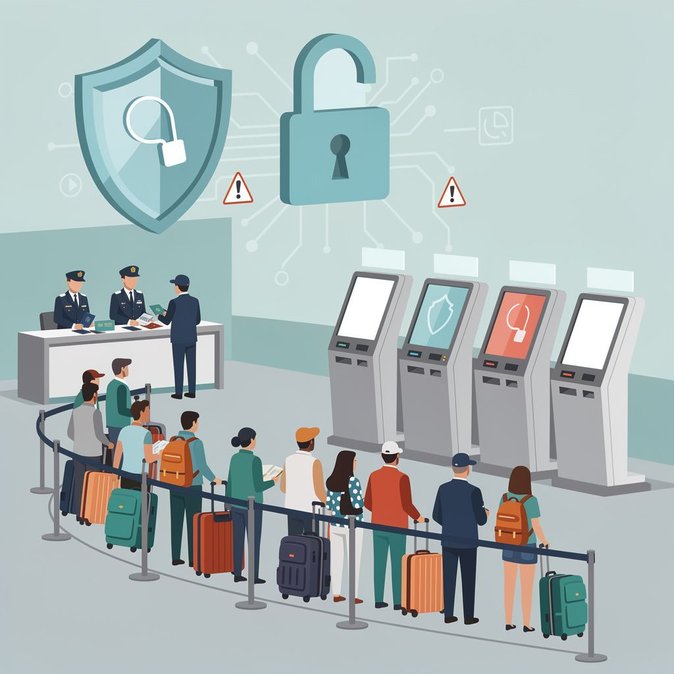
Just three days after a staffing strike snarled departures, Cyprus’ busiest airport confronted a new operational headache: a slowdown in the police-run electronic gates used to scan passports. The malfunction – first observed on Sunday but confirmed by authorities on Wednesday evening (8 July) – resulted from what police spokesman Christos Andreou called “protective measures” introduced after a private cyber-security firm warned of a potential ransomware campaign targeting government networks. With the automated e-gates throttled, all travellers – including EU citizens – had to be processed manually. Transaction times reportedly tripled, with some visitors queueing for 45 minutes in the non-Schengen arrivals hall. Paphos Airport experienced milder slowdowns thanks to lighter traffic, but tour operators reported that at least one coach departure to Limassol had to wait for late-arriving passengers. For corporate mobility teams, the episode highlights the fragility of Cyprus’ border-technology stack just months before the EU-wide Entry/Exit System (EES) becomes mandatory for third-country nationals. Employers bringing in time-critical technicians or project staff should budget extra arrival time and monitor police advisories; holders of the Cyprus Digital Nomad Visa, for example, must still present biometric data on entry and are affected by manual processing delays. The police’s cyber-security unit has since patched the affected servers, but officials have stopped short of a full green light, saying the e-gates will operate “at reduced throughput” until a forensic audit is completed. Airlines have been asked to stagger boarding to prevent arrivals hall overcrowding, and Hermes Airports has reopened a rarely-used secondary arrivals channel to ease congestion. Longer term, the Ministry of Transport plans to deploy a parallel cloud-based border-control platform financed through the EU Recovery Fund, with pilot testing slated for Q4 2026. Until then, mobility managers should advise travellers to carry hard-copy proof of onward tickets and accommodation, as manual officers are more likely to request supporting documents when systems are degraded.
Source: Philenews