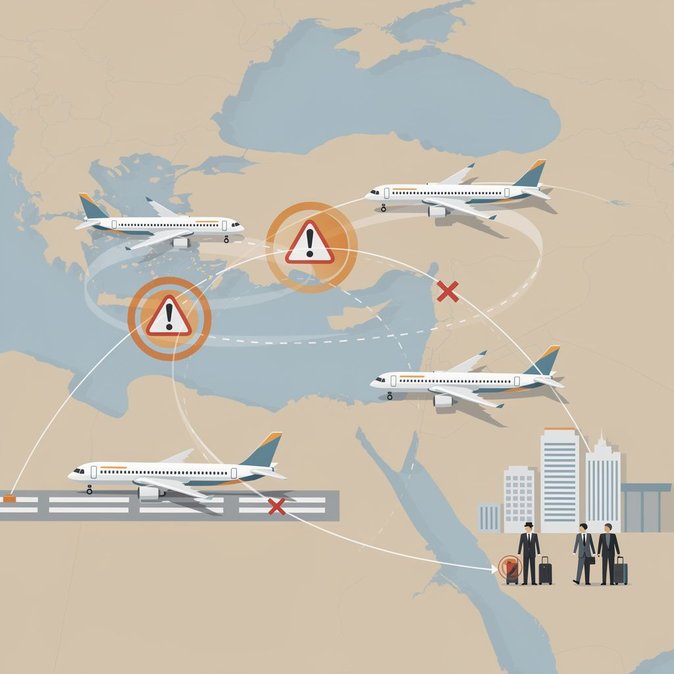
Airlines operating from the United Arab Emirates woke up to another difficult travel day on 19 July, as fresh regional tensions forced last-minute changes to flight schedules. Gulf News confirmed that Etihad Airways cancelled EY653/654 between Abu Dhabi and Kuwait, while Emirates scrubbed eight Dubai–Kuwait rotations (EK 853/854, 855/856, 857/858 and 860 in both directions). Low-cost carriers Air Arabia and flydubai also pulled several services, with the latter axing flight FZ811 on the already volatile Dubai–Abha sector. Although the cancellations primarily affect Kuwait and Saudi Arabia’s southern Abha airport, UAE carriers stressed that their wider networks remain operational. Passengers are being urged to update their contact details, arrive at least four hours before departure and monitor airline websites for real-time status changes. Travel agents report sharp spikes in rebooking enquiries, especially from business travellers with tight connection windows. Behind the disruption is the continued escalation of US–Iran hostilities, which has prompted the European Union Aviation Safety Agency and several national regulators to advise operators to avoid parts of Gulf airspace. While UAE airspace remains open, carriers are adding extra fuel for longer routings and building slack into schedules to cope with ATC re-sequencing. For corporations running mobility programmes, the message is clear: vet itineraries that transit Kuwait, southern Saudi Arabia or Iraqi airspace over the next week; build contingency days into project plans; and remind employees to use airline apps for push notifications. Insurance brokers say most corporate travel policies will cover additional accommodation costs arising from same-day cancellations, provided claims are logged within 24 hours. With school holidays in full swing and DXB already handling close to 260,000 travellers a day, even a small number of cancellations can ripple through the hub. Mobility managers should therefore expect longer queues at re-ticketing desks and factor potential overtime into duty-of-care budgets.
Source: Gulf News