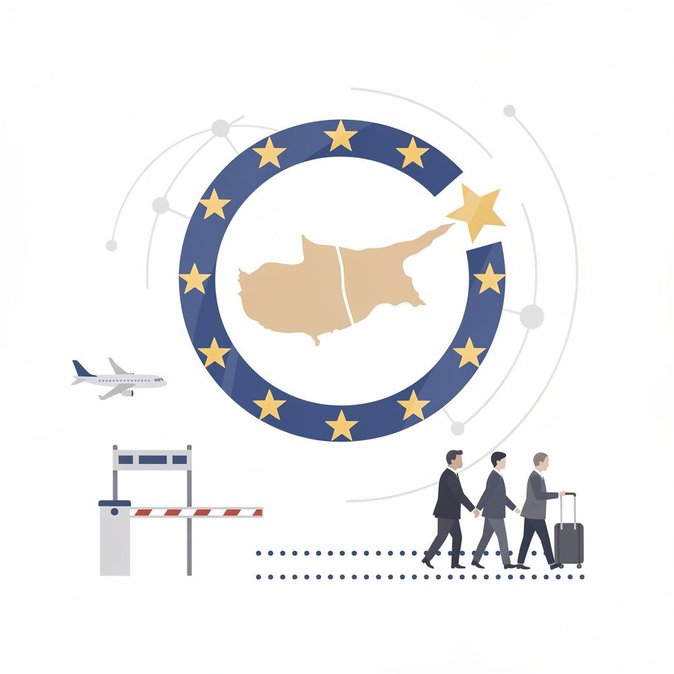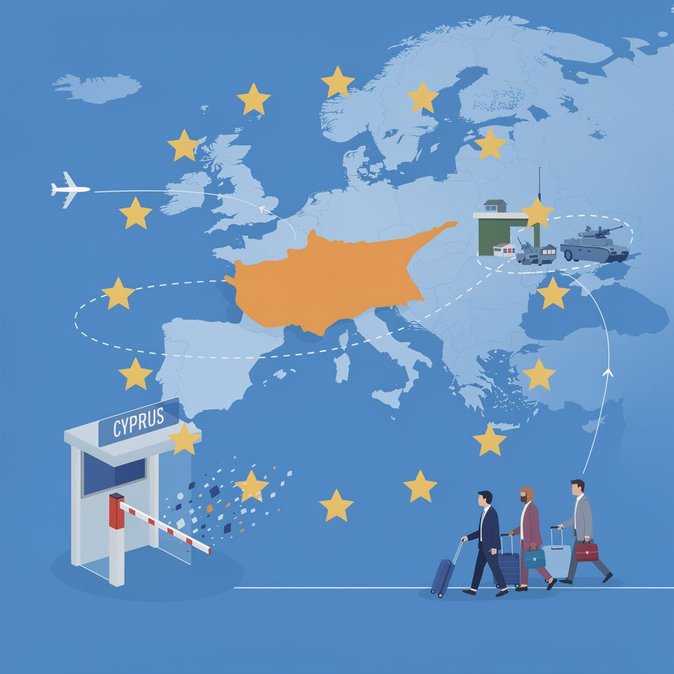
Cyprus has begun an energetic diplomatic campaign to secure full membership of the EU’s Schengen free-travel area within the next 18 months. Speaking to Kathimerini Cyprus, senior officials said Nicosia wants a political green light from the EU Council as early as this September, banking on the positive technical evaluation the island received from the European Commission in the spring. If the timetable holds, Cypriot citizens and resident expatriates could be travelling across 29 European countries without passport checks before the February 2028 presidential election. The government argues that joining Schengen would do more than remove airport queues. It would also anchor Cyprus in what officials call the EU’s “inner core” alongside the eurozone, bolstering the island’s attractiveness for multinationals that base regional headquarters or mobility hubs in Nicosia, Limassol and Larnaca. Over the past decade Cyprus has lured tech and professional-services firms with a 12.5 % corporate tax rate, an English-language legal system and a flexible immigration regime for highly skilled third-country nationals; executives say painless onward travel to the rest of Europe is the missing piece. Yet the path is politically fraught. Unlike Croatia, Bulgaria and Romania, Cyprus faces no land border with a non-Schengen state, but half of its territory remains outside government control following Turkey’s 1974 invasion. EU partners worry that irregular migrants could cross the UN-patrolled Green Line or the post-Brexit British Sovereign Base Areas, obtain Schengen-zone rights in the Republic and continue unchecked to other member states. A Brussels diplomat quoted in the article warned that “similar concerns delayed Bulgaria and Romania for thirteen years,” and that other capitals will demand cast-iron assurances on border management before approving accession. Nicosia insists the risks are manageable. Interior-ministry officials stress that electronic surveillance has tightened along the Green Line and that Cyprus already meets Schengen data-sharing and police-co-operation standards. They also note that the Turkish Cypriot leadership has not yet mounted a formal objection, despite having previously warned that Schengen membership could create a ‘hard border’ on the divided island. The government has briefed business groups, airlines and tour operators, telling them to plan for a phased implementation that would start with the abolition of passport controls at Larnaca and Paphos airports, followed by seaports and, finally, the Green Line crossing points. For companies running regional mobility programmes, the message is to prepare documentation processes now. HR advisers say that once Cyprus is admitted, third-country employees holding Cypriot residence permits will join the queue-free ‘EU/EEA/CH’ channel across most of Europe, saving time and reducing compliance headaches. Conversely, failure to convince the EU Council within the self-imposed 18-month window could erode investor confidence. As one relocation consultant put it: “If Cyprus pulls this off quickly it will punch above its weight in the global talent market; if the talks drag on, the island risks being seen as Europe’s waiting room.”
Source: Kathimerini Cyprus (KNEWS)