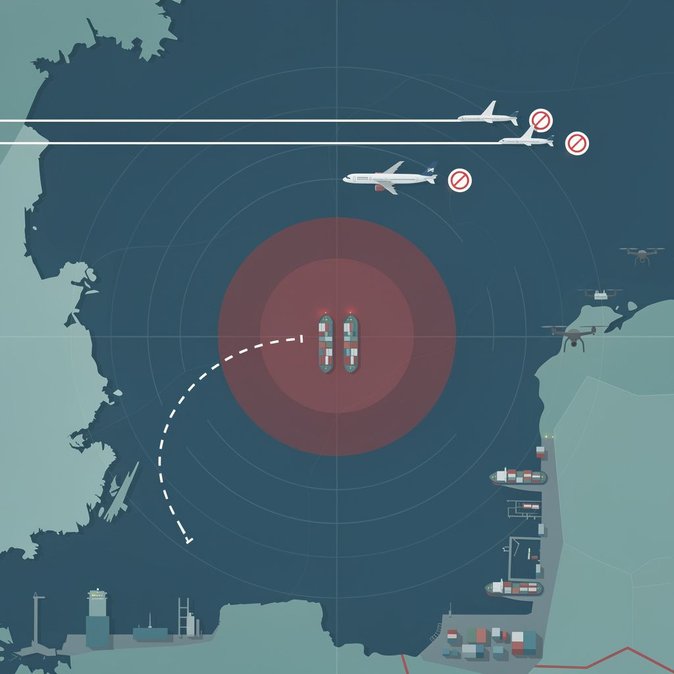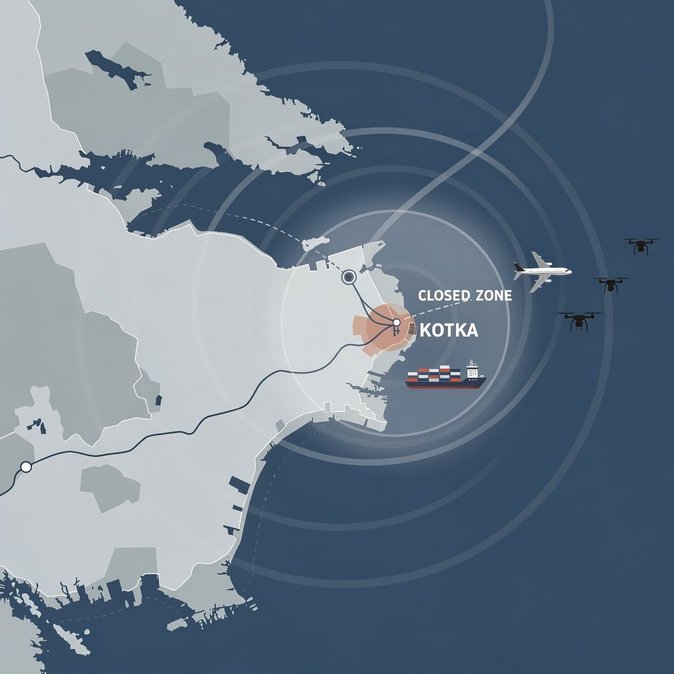
Early on the morning of 4 August 2026 the Finnish Defence Forces (FDF) imposed an emergency no-fly zone and halted civilian shipping in a 30-nautical-mile corridor of the eastern Gulf of Finland, the busy waterway that links the ports of Kotka and Hamina to the Baltic Sea. According to an FDF bulletin, the air-space closure began at 05:26 and was extended to maritime traffic at 05:40. The measures were lifted less than two hours later, at 07:13, once military radar confirmed that no hostile or stray unmanned aerial vehicles had crossed into Finnish territory. The precaution follows a string of Ukrainian long-range drone strikes against oil depots and logistics targets in Russia’s St Petersburg region during July. Finnish and NATO officials fear that malfunctioning drones or Russian counter-measures could force debris across the border, jeopardising commercial aviation lanes and the densely trafficked coastal fairways used by container and Ro-Ro vessels serving Finland’s export-dependent economy. Although short in duration, the restriction triggered knock-on delays for four Finnair regional departures out of Helsinki-Vantaa and forced two ro-ro ferries operated by Finnlines to reduce speed while awaiting clearance. Freight forwarders told Yle that every hour of unscheduled hold-up costs an estimated €60,000 in additional fuel and labour across the supply chain. “Even a 90-minute pause puts pressure on just-in-time timber and paper exports,” said Juha Korhonen, head of logistics at the Confederation of Finnish Industries. The FDF has issued six similar temporary closures since May, a marked increase over the same period last year. Under Finland’s Border Security Act, the military can restrict civil traffic when there is an imminent safety threat; the Interior Ministry must be notified ex-post if the closure exceeds four hours. Defence analysts say the frequency of the measures underscores how Russia’s war in Ukraine has begun to spill into Nordic air-space management. For multinational companies routing cargo through Finland, contingency planning now routinely includes buffer windows and alternative rail links via Sweden. Looking ahead, the Transport and Communications Agency (Traficom) is drafting guidelines for automated NOTAM alerts that airlines and shipping agents can integrate into their dispatch software. Stakeholders are also calling for accelerated installation of counter-drone jammers at Helsinki-Vantaa and major ports. Until a permanent regional air-defence coordination cell is stood up under NATO command, businesses operating in Finland should expect sporadic, short-notice disruptions on the eastern frontier.
Source: Yle News