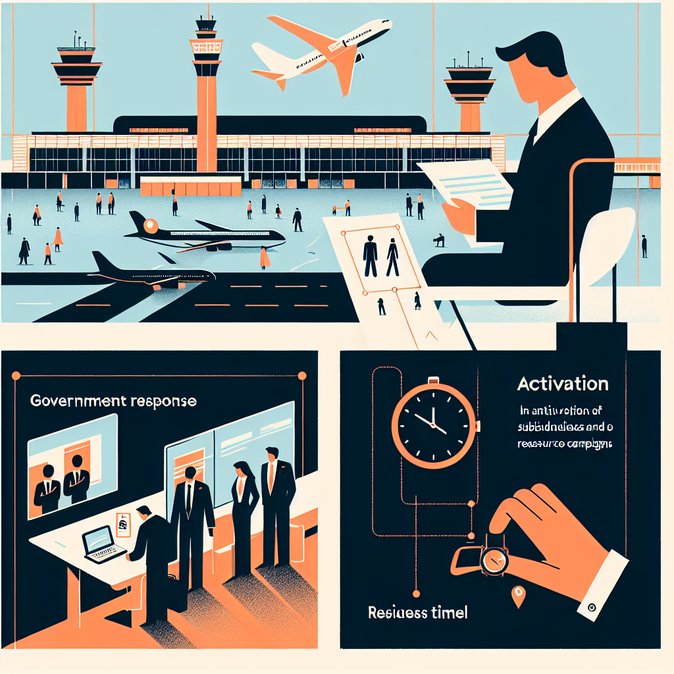
Cyprus’ vaunted post-pandemic aviation comeback has hit a serious air pocket. Airport operator Hermes Airports confirmed on 8 April that combined traffic at Larnaca (LCA) and Pafos (PFO) fell to 599,218 passengers in March 2026, 15.3 per cent below the same month last year. The slide reverses 14 consecutive months of record volumes and is being blamed squarely on the flare-up of the Iran war and the wider Gulf security crisis, which is unnerving both leisure tourists and corporate travellers bound for the Eastern Mediterranean. Hermes’ breakdown shows Larnaca—the island’s primary hub for network carriers—was hardest hit, down 17.1 per cent year-on-year to 415,686 travellers, while the more point-to-point-focused Pafos recorded a 10.7 per cent drop to 183,532. Forward bookings for April have also softened, with several Gulf carriers trimming frequencies and long-haul tour operators offering fee-free rebooking. The Ministry of Tourism has already rolled out a targeted marketing blitz in the United Kingdom and Germany to reassure partners of Cyprus’ safety and encourage the use of fifth-freedom connections that bypass the conflict zone. Business-travel managers are warning clients to budget extra transit time. Although EU point-to-point flights remain largely unaffected, services crossing the upper Persian Gulf now face longer routings to avoid restricted airspace, adding up to 50 minutes to block times and pushing crews toward flight-duty limits. Travel-management companies (TMCs) are advising multinational staff to retain flexible tickets, especially on itineraries involving Doha, Dubai or Tehran, and to monitor operators’ waiver policies. Cypriot hoteliers fear the slump may snowball if confidence is not restored by mid-May, traditionally the moment pricing power for the peak season is locked in. The government’s emergency wage-subsidy scheme—activated last week for tourism businesses whose turnover has dropped more than 40 per cent—offers short-term relief but will not compensate for a protracted fall in arrivals. Analysts at Tourism Economics calculate that every percentage point decline in Larnaca throughput shaves €9 million off Cyprus’ GDP. For globally mobile staff and expatriates based on the island, the message is mixed. While fewer tourists mean shorter queues and cheaper accommodation, airlines may consolidate schedules or up-gauge aircraft to maintain viability, reducing flight-time options. Employers with regional hubs in Nicosia are therefore reassessing their summer travel budgets and urging staff to book early while seats remain plentiful.
Source: Cyprus Mail