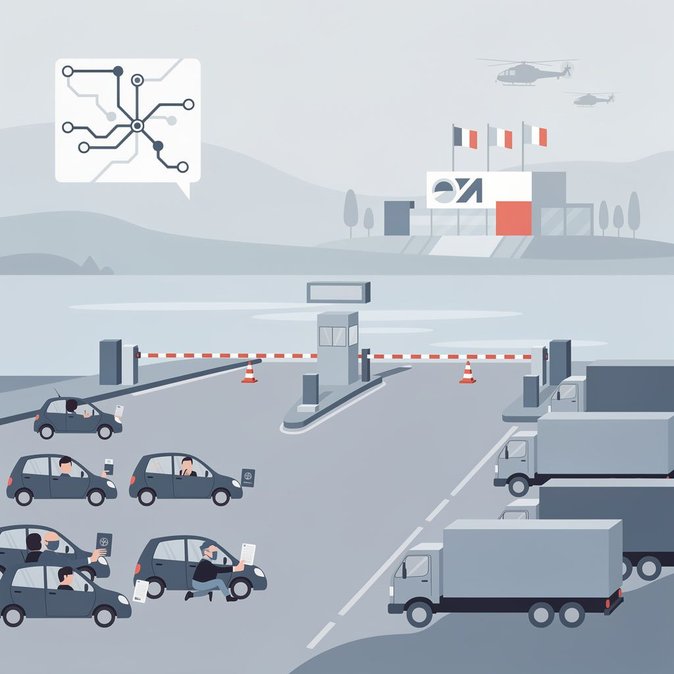
French and Swiss authorities have rolled out the most stringent border-security plan in two decades ahead of the G7 summit in Évian-les-Bains (15-17 June). From 12-18 June only seven of 35 road crossings between Haute-Savoie and the Canton of Geneva remain open, with mobile gendarmes, anti-terror units and drones patrolling the Franco-Swiss frontier. The Swiss Federal Council re-introduced temporary Schengen internal-border checks, effectively suspending the usual free-flow regime, while France has deployed 13 000 police and military personnel in the lakeside region. The clamp-down affects an estimated 200 000 cross-border commuters—many of them healthcare workers and executives in Geneva’s finance and commodity-trading hubs. To maintain essential services, Geneva authorities issued 25 000 special access badges and urged companies to activate remote-work protocols where possible. Logistics firms report that just-in-time deliveries from French suppliers now face 40- to 90-minute delays, forcing some multinationals to reroute freight via Basel. While Schengen rules allow temporary controls for major events, the scale of closures is unusual: during the 2021 Biden-Putin summit only four minor crossings were sealed. Employer groups warn that repeated re-introductions could erode Switzerland’s reputation for seamless mobility—critical for attracting regional headquarters that rely on a binational labour pool. For assignees, the practical advice is clear: carry passports even for routine cross-border errands, budget extra travel time, and download live-traffic apps that reflect real-time closures. Mobility managers should update per-diem allowances to account for meal costs incurred during extended commutes and review duty-of-care protocols for staff travelling between Geneva and French Alpine resorts during the summit window. Authorities say checks will be lifted at 00:00 on 19 June, but risk consultants caution that residual congestion could linger into the weekend as dismantling crews move heavy barriers and security hardware.
Source: Le Monde