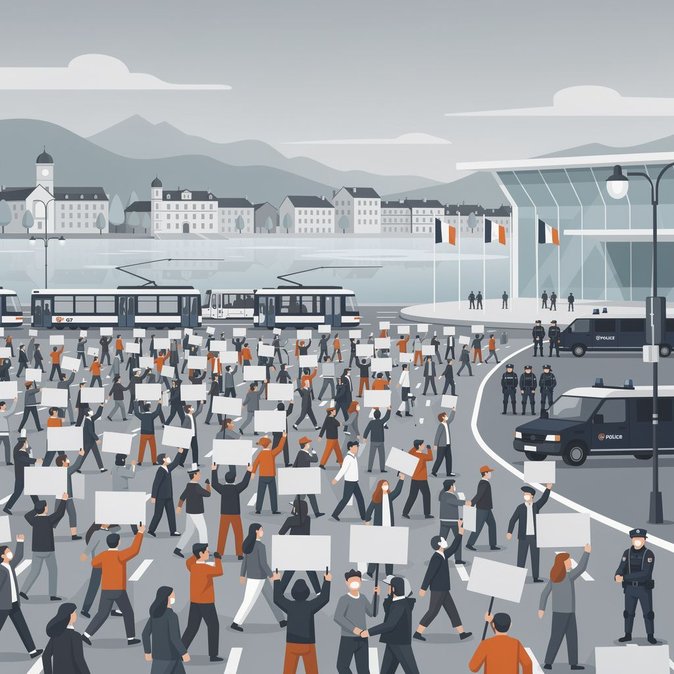
While the diplomatic caravans rolled into Évian, Geneva itself saw the largest street protest since the 2003 anti-G8 riots. More than 20 000 demonstrators—30 000 according to organisers—marched through the lakeside city on 15 June, denouncing what they described as the summit’s exclusionary economic agenda. Swissinfo’s Italian-language service reports that police detained 28 people, three of them under provisional arrest, after black-bloc activists smashed shop windows, torched a car and clashed with riot units on Quai Wilson. Law-enforcement authorities set up a “kettle” late in the evening, holding some 300 protesters for identity checks that lasted into the early hours. The Socialist Party has demanded a full report, alleging disproportionate use of tear gas and inadequate access to water for those contained. The incident has reignited debate over Switzerland’s crowd-control tactics, which companies must factor into duty-of-care programmes for assignees. From a mobility standpoint, the disturbances forced the temporary suspension of several tram lines, closure of Cornavin railway square and rerouting of night buses—further compounding the G7-related timetable reductions. Hotels in the Paquis district activated contingency plans, offering check-in outside police perimeters and escorting guests on foot. Multinational firms hosting side-events at Geneva’s international organisations have since increased private-security staffing and advised employees to avoid spontaneous gatherings in the city centre. Insurers note that political-violence clauses in standard travel policies typically exclude damage from riots, underscoring the need for explicit cover when sending staff to high-profile summits.
Source: SWI swissinfo.ch