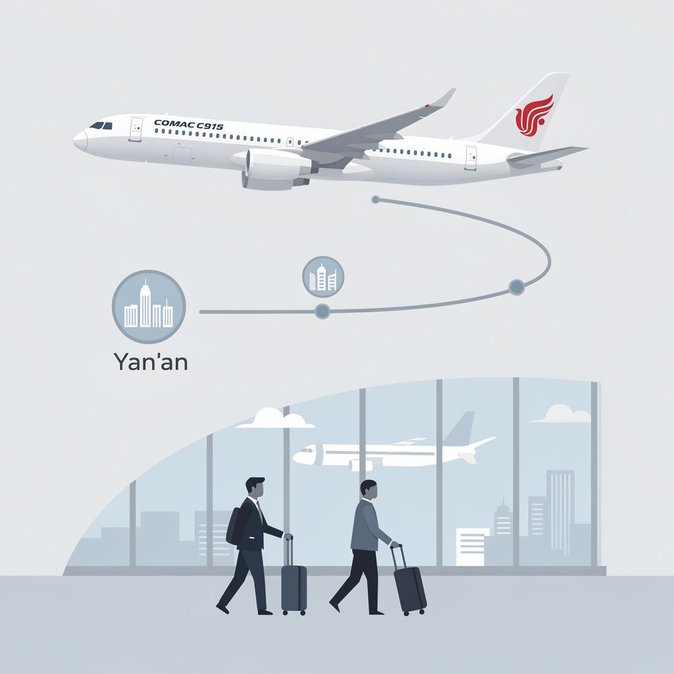
Air China on 25 June put China’s home-grown C919 narrow-body jet into revenue service on a new Beijing–Yan’an sector. The flight marks the first time the 164-seat aircraft has been operated by the flag carrier on a scheduled route beyond its initial Shanghai routes with China Eastern. While the maiden flight is domestic, executives said the airline intends to phase the C919 into selected regional services to Seoul, Osaka and Singapore as the fleet grows to 12 frames by mid-2027. The indigenously built jet offers 14 per cent lower fuel burn on 1,500 km missions and a two-class cabin layout that is attractive for high-yield corporate traffic. For travel managers, the entry of the C919 means additional frequency on secondary city pairs and potentially sharper pricing as Chinese carriers tap lower operating costs. Safety regulators in Europe are still processing validation of the jet’s type certificate, but insiders at the Civil Aviation Authority of Singapore told Global Mobility News they expect approvals “within 12-18 months,” clearing the path for short-haul international deployment. From a mobility policy standpoint, companies should update their airline safety matrices to reflect the C919’s service record and brief travelling staff on the new cabin configuration, which features 18-inch seat widths and on-board Wi-Fi compatible with China Mobile’s 5G network. Early feedback from passengers cites quieter cabins and faster boarding thanks to wider doors.
Source: Xinhua via BigNewsNetwork