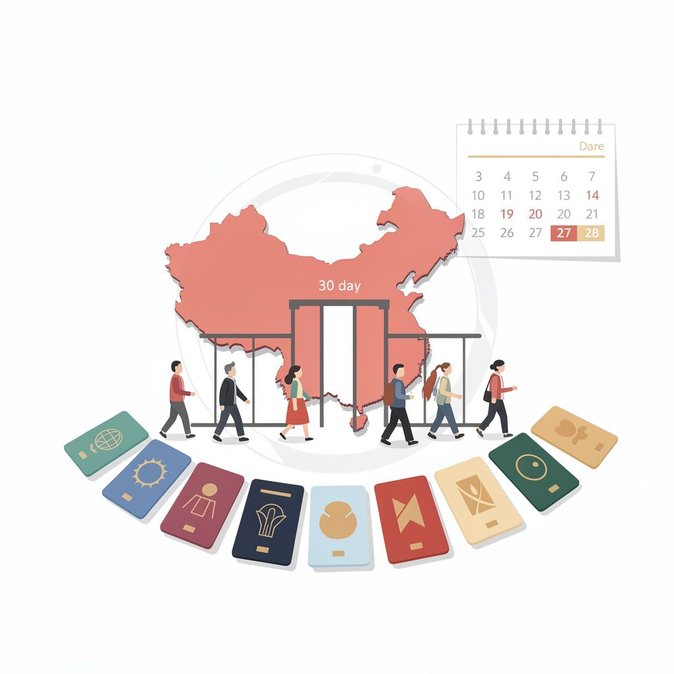
The National Immigration Administration’s 240-hour Transit-Without-Visa (TWOV) regime has been one of the biggest facilitators of post-pandemic travel into mainland China, yet many travellers and mobility managers still struggle with the fine print. On 27 June 2026 the specialist portal MyChina.Guide published an NIA-verified explainer that pulls together the latest port lists, eligibility matrix and timing mechanics for the 10-day stay policy. Key clarifications include: • The clock starts at 00:00 on the day **after** arrival, giving business travellers almost a full extra calendar day on the ground. • A consolidated list of 65 participating ports across 24 provinces is now live; new additions since March include Jinan, Yantai and the West Kowloon high-speed-rail terminus. • A total of 55 passport-issuing countries (40 European, 6 American, 2 Oceanian and 7 Asian states) are confirmed. Passports must have six-month validity, and onward tickets must show a confirmed seat to a third country. • Permitted activities remain business meetings, client visits, trade fairs, tourism and family visits. Paid employment, study and journalism still require a visa. For global mobility teams the biggest operational gain is predictability: the article’s flow-chart examples make it easier to schedule ten-day project visits without burning single-entry visas. Airlines and TMCs meanwhile get a definitive reference point to train frontline staff who often act as the first compliance gate. Mobility advisors should update pre-trip checklists to highlight the midnight-plus grace period and the need to keep boarding passes for exit inspection. China has framed the expanded transit waiver as part of its drive to reach 100 million annual foreign arrivals by 2027. With Q1 2026 already showing a 29.3 % jump in visa-free entries, the clearer guidance is likely to accelerate that trend through the summer conference season.
Source: MyChina.Guide