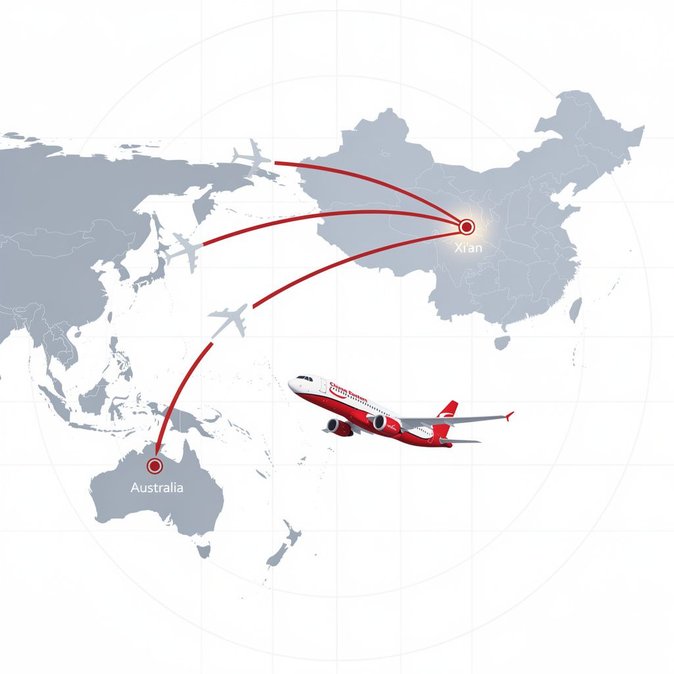
In the early hours of Monday (6 July, Beijing time) China Eastern Airlines released the blueprint for its 2026 long-haul network, promising the most aggressive expansion by a Chinese carrier since borders reopened. Highlights include brand-new services from Shanghai Pudong to Tashkent (30 March), Xi’an to Vienna (20 April) and a seasonal Shanghai–Adelaide tag (20 June–2 August). Eight further start-ups are scheduled “subject to slot confirmation”, covering Mumbai, Dublin, Cheongju, Manado, Surabaya, Tbilisi, Ulaanbaatar and Muscat. On mature trunk markets capacity is being lifted sharply: Shanghai–Copenhagen, London Gatwick, Frankfurt, Barcelona and Venice will all gain additional weekly frequencies, while Oceania sees Sydney, Melbourne and Brisbane boosted to double-daily peaks during China’s winter peak holiday season. Short-haul increases on routes such as Shanghai–Daegu and Cebu round out the plan. The airline says the strategy is driven by two forces. First, outbound demand has returned to 94 % of 2019 levels for business-class passengers and 102 % for premium-economy leisure travellers. Second, slot portfolios at major EU and Southeast-Asian hubs were re-negotiated during the pandemic, giving Chinese carriers a once-in-a-decade window to capture prime timings. For corporate mobility managers the new network reverses years of thin capacity that forced passengers onto multi-stop itineraries. Direct Xi’an–Vienna will slash door-to-door travel for central-China exporters to Central Europe by up to eight hours, while the Pudong–Muscat link establishes the first non-stop between mainland China and Oman’s growing logistics free-zone. China Eastern says it is baking carbon-offset bundles and Wi-Fi passes into corporate contracts to win back multinational accounts that migrated to Gulf competitors.
Source: iMedia