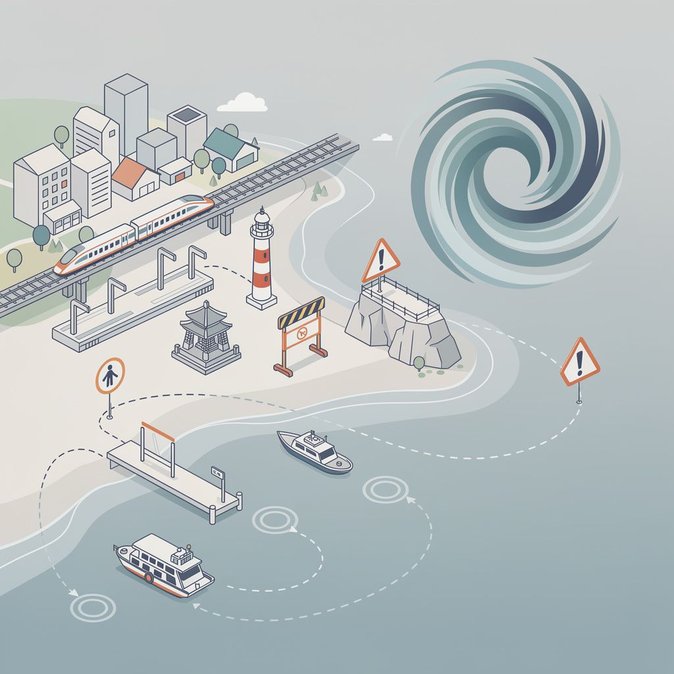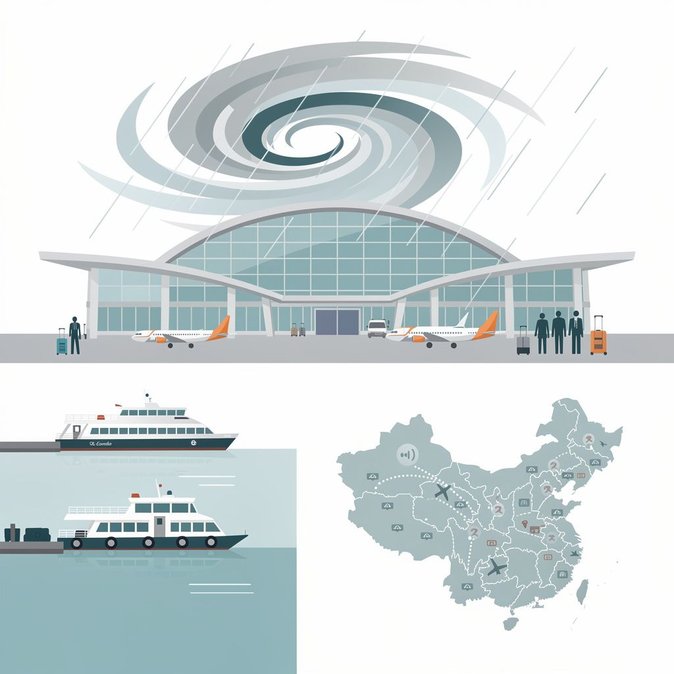
Severe tropical storm Bavi is already disrupting corporate itineraries. Shanghai’s Pudong (PVG) and Hongqiao (SHA) airports announced late on 10 July that 387 flights scheduled for 11–12 July have been pre-emptively cancelled as the typhoon alters course toward China’s eastern seaboard. Carriers affected include China Eastern, Spring Airlines and several international cargo operators that use overnight slots at PVG. Airport authorities said wind gusts could reach 11–12 on the Beaufort scale across the Yangtze River Delta. In addition to aviation, Huangpu River sightseeing cruises and the Changxing cross-river ferry suspended operations from 17:00 on 10 July, while Shanghai Disney Resort and a raft of open-air cultural events have postponed weekend programmes. Logistics companies warned of possible backlogs at the Waigaoqiao bonded zone as container trucks face bridge restrictions. For business travellers the immediate advice is to monitor airline apps for re-routing options. Most Chinese carriers are offering free changes or refunds for flights between 10 and 13 July. Travellers with onward connections through Beijing, Guangzhou or Chengdu should factor in knock-on delays, as aircraft and crew rotations are re-sequenced. From a mobility-risk perspective the episode underscores the growing importance of climate-related contingency planning. Shanghai’s two hubs handled 116 million passengers last year and are linchpins for expatriate assignments into the Yangtze River Delta free-trade zones. HR teams should make sure emergency contact protocols cover extreme-weather notifications and hotel re-booking support – especially for short-term assignees who may lack local language skills. Meteorologists expect Bavi to weaken after landfall between Fujian’s Xiapu and Zhejiang’s Wenling in the early hours of 12 July, but heavy rain may still disrupt high-speed rail on the Nanjing–Hangzhou and Ningbo–Taizhou lines.
Source: Xinmin Evening News