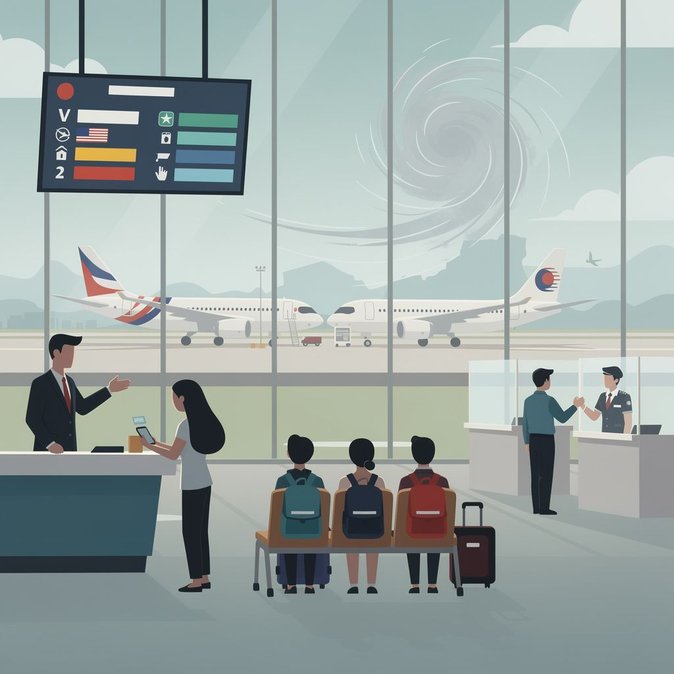
Although Typhoon Bavi made landfall hundreds of kilometres south, its outer rainbands produced severe thunderstorms over northern China on 12 July, leading Beijing Capital (PEK) and Daxing (PKX) airports to delay or cancel more than 400 flights. The Civil Aviation Administration issued a Level IV yellow alert for traffic flow control, ordering airlines to reduce arrivals during peak lightning windows. Several US and European carriers operating late-night Pacific arrivals were forced to divert to Tianjin or Qingdao, requiring rapid immigration-clearance arrangements for crews and layover passengers. Foreign business travellers arriving under visa-free transit programmes were advised to retain boarding passes and diversion notices, which immigration offices will accept as proof of original arrival point when calculating permitted stay durations. For companies relying on same-day domestic connections to factory sites, the disruption underscores the benefit of booking fully flexible domestic fares and considering high-speed rail as a backup. Beijing’s main stations reported a 22 percent passenger uptick as travellers switched modes. The CAAC said it expects normal operations by Monday afternoon, weather permitting, but urged carriers to keep spare international-qualified crews in northern China through the typhoon season to accommodate irregular operations.
Source: Anadolu Agency