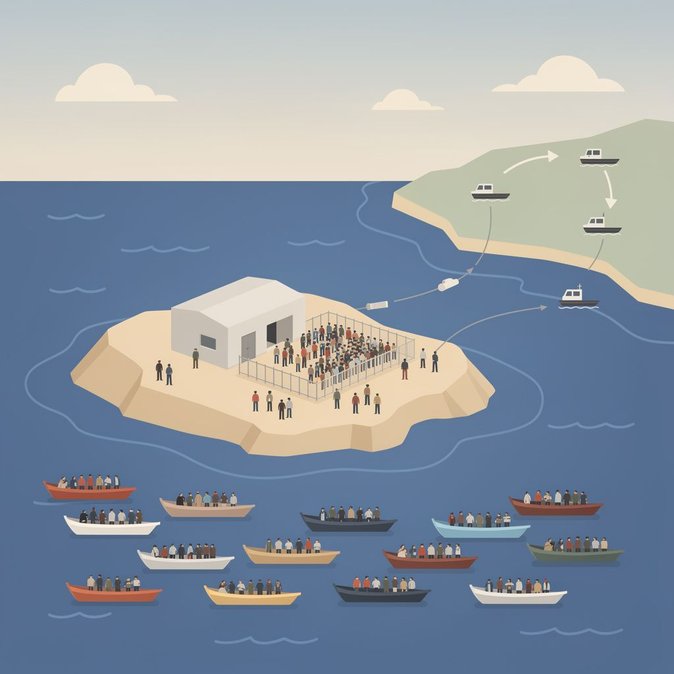
Lampedusa’s fragile reception system endured yet another stress-test overnight as 20 small boats carrying more than 2,100 people reached the island between the afternoon of 17 July and the early hours of 18 July. Patrol vessels of the Guardia Costiera and Guardia di Finanza intercepted most of the wooden craft, some barely seven metres long, but dozens of people also landed directly on the beaches. According to local officials, the majority of the new arrivals departed from the Tunisian ports of Sfax and Chebba and include nationals of Guinea, Mali, Côte d’Ivoire, Liberia, Cameroon, Senegal and Burkina Faso, as well as several families with young children. The government-run “hotspot” in Contrada Imbriacola is once again overcrowded: against an official capacity of 400 places, the centre was already hosting 1,256 people by dawn on Saturday. To avert a humanitarian and security breakdown, the Agrigento Prefecture ordered the immediate transfer of 330 migrants to Porto Empedocle on the scheduled ferry and to other mainland centres aboard navy and coast-guard patrol ships. Transfers will continue in waves as soon as COVID and security screenings are completed. Mayor Filippo Mannino warned that the island is “a powder-keg” and renewed his call for a permanent EU relocation mechanism. Sicily’s regional president Renato Schifani echoed the appeal, arguing that NGO-rescued migrants should be sent to other European ports instead of adding pressure on Lampedusa. The humanitarian ship “Rhapsody”, meanwhile, is disembarking 760 migrants in Porto Empedocle after completing quarantine, freeing space to embark new transfers from Lampedusa later today. For global-mobility managers the episode highlights two immediate risks. First, business travellers heading to Sicily may face transport disruptions as the coast-guard prioritises rescue and transfer operations; ferry schedules have already been altered. Second, companies moving talent through the central Mediterranean corridor should anticipate processing delays as immigration police redeploy staff to crisis management. Employers sponsoring work permits for North-African nationals can expect longer biometric-capture appointments in coming days. In the medium term, the surge will likely feed the political momentum in Rome for stricter maritime controls and faster returns—proposals that could translate into new decrees affecting visa issuance and compliance obligations for all employers operating in Italy.
Source: La Sicilia