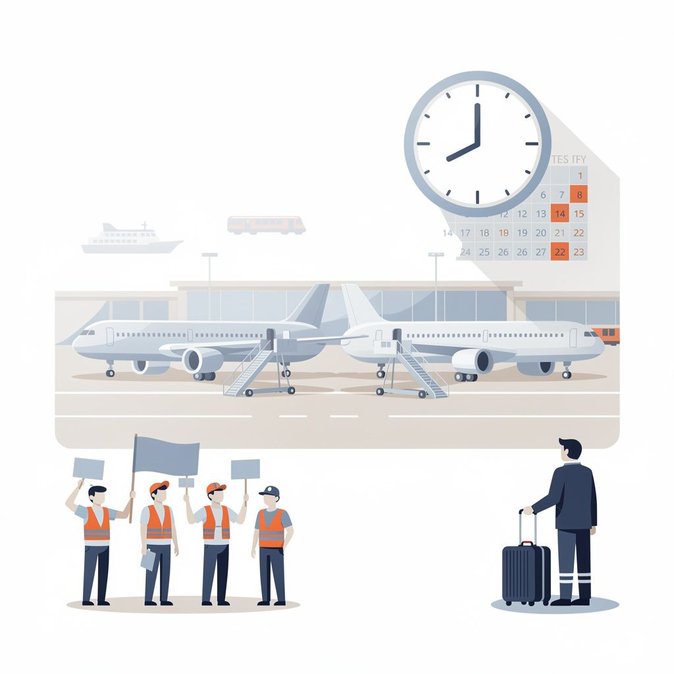
Business travellers heading to or from Italy on Tuesday, 21 July face a perfect storm of industrial action across the aviation sector. Budget carrier easyJet’s pilots and cabin crew will down tools for 24 hours in a nationwide protest called by the USB Lavoro Privato union over rostering and pay. Regional airline DAT LT, lifeline operator for islands such as Lampedusa and Pantelleria, will strike over the same period, potentially cutting the only daily links to several summer holiday and business destinations. Ground-handling companies at Milan-Malpensa, Lamezia Terme, Naples, Salerno, Olbia and Alghero have coordinated stoppages that could slow baggage delivery and turnaround times even for airlines not directly involved. Under Italian law certain flights are protected: the Civil Aviation Authority (ENAC) has published a list of services that must operate between 07:00-10:00 and 18:00-21:00, plus a handful of “social-necessity” routes. Nevertheless, corporations with critical meetings or tight connection windows are being urged to put contingency plans in place. EU Regulation 261/2004 gives passengers whose flights are cancelled with less than 14 days’ notice a right to re-routing or compensation, but airlines have 7 days to pay: cash-flow minded SMEs should be ready for paperwork and delays. The walkout is only the opening salvo in what unions describe as a “hot week” of transport unrest: a 24-hour ferry strike at Grandi Navi Veloci starts at noon on 22 July, followed by a national rail strike from 21:00 on 23 July to 24 July that will affect high-speed Frecce, Intercity and most regional services. The clustering of actions means relocation managers may need to rearrange onward surface travel or hotel nights at short notice, especially for executives connecting through Rome and Milan hubs. From a mobility-policy standpoint, the dispute highlights persistent fragmentation in Italy’s labour relations. EasyJet crews are covered by a UK-registered contract while working under Italian operational rules; DAT staff have contracts governed by Danish law but negotiated locally. Multinationals operating in Italy therefore face a patchwork of collective-bargaining frameworks that can erupt simultaneously. Consulting local employment counsel and subscribing to ENAC’s guaranteed-flights feed are fast becoming best practice for travel-risk teams.
Source: Wanted in Rome