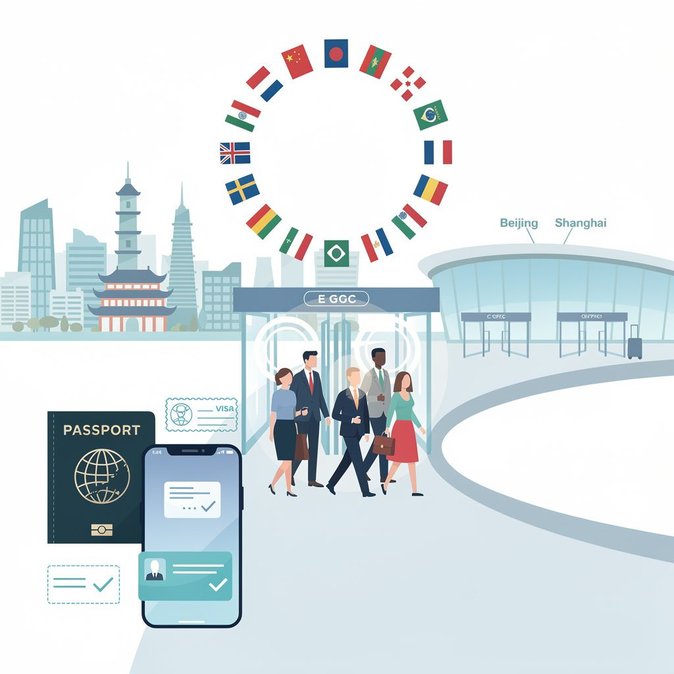
Macao hosted the 13th APEC Tourism Ministers’ Meeting on 27 June, drawing delegations from all 21 APEC economies. While delegates endorsed a broad tourism-recovery agenda, the headline outcome for global-mobility managers was a joint commitment to ‘substantially expand mutual visa-exemption and digital-entry programmes’ before the next ministerial in 2028. China’s Ministry of Culture and Tourism laid out an ambitious target: raise the share of intra-APEC journeys that can be made on a visa-free or e-visa basis from today’s 42 percent to “well over 60 percent” within two years. Officials from Indonesia, Mexico and Vietnam said they would pilot 30-day visa waivers for selected APEC partners as early as Q4 2026. The ministers also endorsed a roadmap to interconnect existing digital travel‐credential pilots—including China’s “Smart Travel Pass”, Australia’s ETA, and South Korea’s K-ETA—so that travellers can reuse biometric and security data instead of re-applying country by country. APEC’s Tourism Working Group will chair a technical task-force, with China volunteering to fund the initial interoperability sandbox at Beijing Capital and Shanghai Pudong Airports. Airlines welcomed the plan: China Southern said a seamless digital pass could cut check-in time for connecting passengers by 25 percent. For corporate travel programmes the most immediate benefit is clarity on timelines. Ministers instructed immigration agencies to publish country-by-country implementation schedules by the end of September. Mobility teams should therefore be able to update travel-approval workflows and traveller-risk assessments well before the 2026 year-end peak season. Industry observers expect China to add at least five more APEC economies—likely Indonesia, Malaysia, Peru, the Philippines and Papua New Guinea—to its unilateral 30-day visa-free list. The meeting also recognised labour-mobility bottlenecks. Delegates from Singapore and China proposed a new APEC ‘Business Assignment Corridor’ framework that would mutually recognise short-term work permits of up to 90 days. If adopted, this could sharply reduce the document load for engineers and project managers rotating between member economies. A public consultation draft is promised for early 2027. Finally, Macao itself unveiled a local incentive: from 1 August, holders of any APEC Business Travel Card will enjoy fast-track e-gates and a special lane on the Hong Kong-Zhuhai-Macao Bridge, cutting shuttle time to Zhuhai and Shenzhen by an estimated 40 minutes. Multinationals with Greater-Bay-Area operations should factor this into routing decisions for visiting executives.
Source: People’s Daily