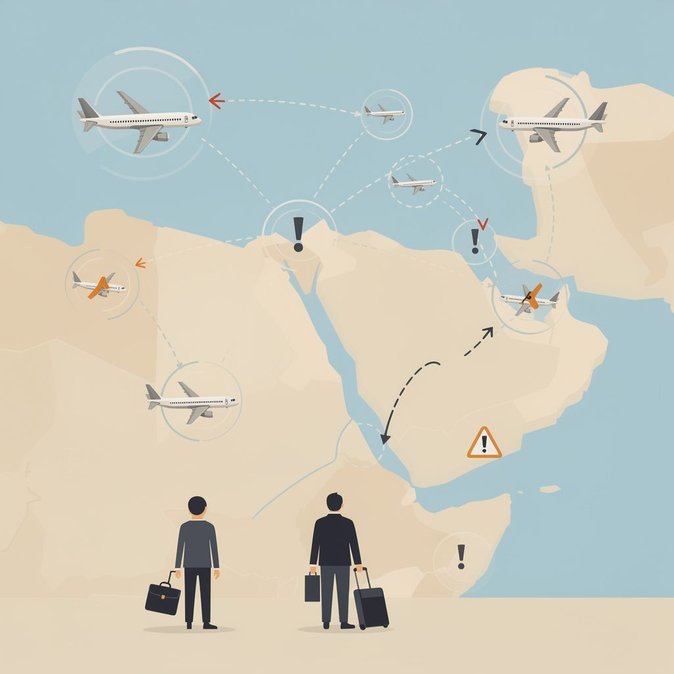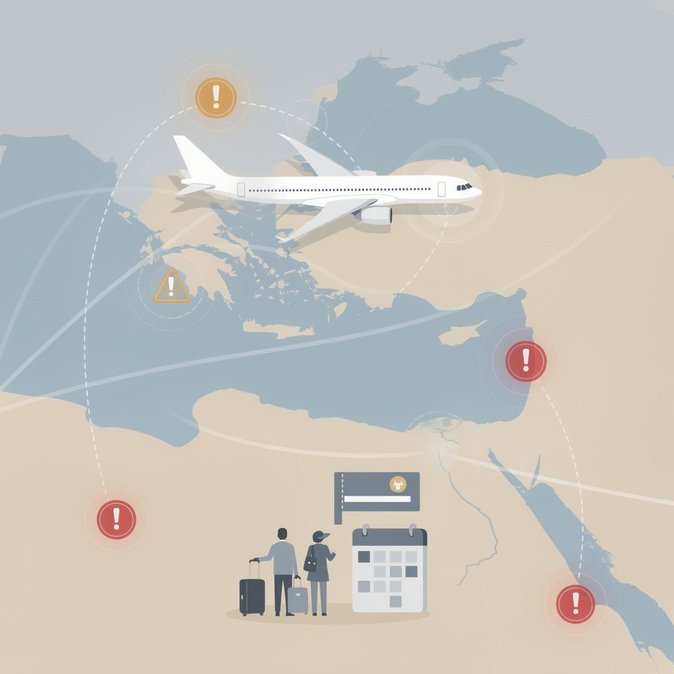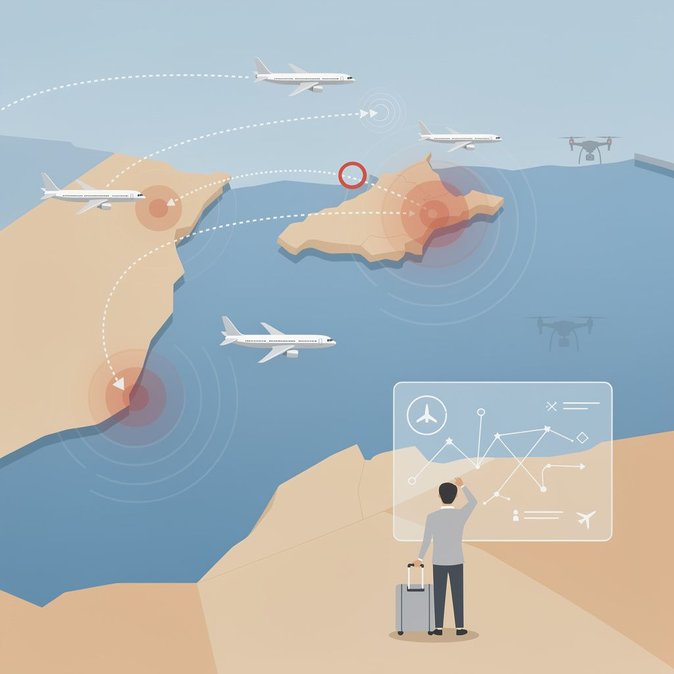
Renewed Iranian drone and missile attacks across the Gulf prompted UAE carriers to cancel or heavily delay 16 services to Bahrain and Kuwait on July 20, 2026. Etihad scrapped EY653/654 (Abu Dhabi–Kuwait) for a second consecutive day, while Emirates pulled four Kuwait rotations (EK853/855/857/859) and three Bahrain services (EK835/837/839). Flydubai and Air Arabia also axed multiple departures from Dubai, Sharjah and Abu Dhabi. Air-space closures in Bahrain and rolling drone interceptions in Kuwait triggered the schedule shake-up. Bahrain’s Civil Aviation Authority confirmed that warning sirens were activated after navigation equipment was targeted, while Kuwait’s air-defence units shot down several drones. Although Dubai and Abu Dhabi airports remained fully operational, ripple effects—including crew-duty constraints and aircraft rotations—forced carriers to consolidate frequencies. For corporate travel managers, the disruption highlights the fragility of short-haul Gulf networks during geopolitical flare-ups. Companies with regional commuters should build contingency days into itineraries, secure flexible tickets, and maintain up-to-date traveller-tracking data to comply with new ISO 31030 travel-risk guidelines. Insurers report a spike in claims for missed connections and additional accommodation. Mobility leaders are advised to review policy wordings: many “delay” clauses activate only after six hours, and war-risk exclusions may apply if airspace closures are officially linked to hostilities. Operationally, the cancellations also expose HR to visa-overstay penalties: Kuwait visit visas expire on exit, and overstays incur KD 10 per day. Employers must verify new exit dates for assignees holding short-term GCC-wide multiple-entry permits.
Source: Khaleej Times