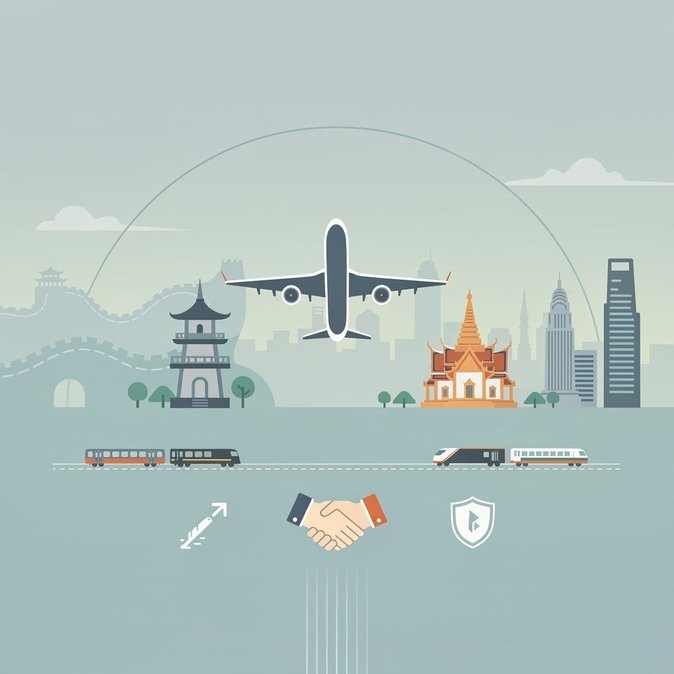
Concluding Thai Prime Minister Anutin Charnvirakul’s 16–20 July state visit, Beijing and Bangkok issued a 6,000-word joint statement that, among wider economic pledges, places tourist mobility at the centre of the two countries’ “Shared Prosperous Future” agenda. Paragraph 140 of the document “re-emphasises the significance” of the bilateral ordinary-passport visa-waiver agreement—implemented in March—and instructs both civil aviation authorities to “explore additional direct air links.” Thailand has already reaped dividends: arrivals from China topped 4.2 million in H1 2026, approaching 90 % of pre-pandemic volume, with spending per capita up 12 % thanks to longer average stays. Chinese carriers currently operate 186 weekly flights to Thailand; analysts expect that figure to exceed 230 by year-end, with likely new routes from Nanjing, Wuhan and Chongqing to Phuket and Chiang Mai. The reaffirmation offers clarity for mobility planners who had questioned the waiver’s permanence amid Thailand’s cabinet reshuffle last month. Corporates deploying staff to Eastern Economic Corridor projects can continue to rely on visa-free entry for up to 30 days per trip, renewable by a same-day run to a neighbouring country. Both sides also agreed to expedite smart-customs pilots and “single-window” clearance at railway and road checkpoints once Phase 1 of the China–Thailand high-speed rail opens in 2027. Practically, the statement urges closer police cooperation against telecom fraud and human-trafficking rings—issues that have tarnished Thailand’s appeal among Chinese tourists. Employers should ensure that posted workers use registered transport providers and that trip-risk assessments account for ongoing law-enforcement sweeps in border provinces such as Chiang Rai. Nevertheless, the political signal is clear: Beijing sees Thailand as a flagship market for its outbound-tourism restart, and Bangkok is banking on Chinese spending to hit its 2030 revenue targets.